Rural development in the Baltic States: assessment of the current state


Abstract
The article assesses the development level and current state of rural areas in the Baltic States, with a particular focus on Latvia, Lithuania, and Estonia. The primary objective of the study is to identify key aspects of agricultural production, demographic trends in rural areas, and the socio-economic challenges these territories face, as well as to develop recommendations for their sustainable and inclusive growth. The research methodology adopts an interdisciplinary approach, incorporating demographic, economic, social, and environmental dimensions of rural development. The study employs comparative, systemic and statistical data analyses. For a more in-depth examination, methods of economic-geographical analysis and document analysis of European Union policies — particularly the Common Agricultural Policy (CAP) — are utilized. The findings highlight both shared and country-specific issues affecting rural areas in the Baltic States, such as depopulation, aging of the population, high unemployment, low employment rates, and disparities in infrastructure. Special attention is given to agricultural trends, including the impact of EU agricultural policies, structural transformations in the agricultural sector, and the adoption of innovative technologies. The study underscores the importance of enhancing government support for agriculture, implementing sustainable production practices, and improving the overall quality of life in rural areas. This article provides a foundation for future research, including the exploration of the role and significance of integrating rural areas into national and European economic frameworks, enhancing governmental and international support mechanisms, and developing targeted programs aimed at improving rural living standards. These programmes are intended to involve local communities, including parish councils, farmers’ unions, and business associations.
Introduction. Problem statement
In the context of modern geopolitical and geo-economic changes, non-urbanized territories are in the focus of close scientific attention due to their demographic, economic and social characteristics [1], [2], [3], [4], and their socio-economic development is one of the key aspects of the formation of a balanced spatial development of the country [5], [6], [7], [8].
Countries of the Baltic region are of particular interest1 because their geographical location at the junction of Eastern and Western Europe determines their unique socio-economic characteristics. The challenges of rural development are especially pronounced in Latvia, Lithuania, and Estonia. After regaining independence and integration into the European Union, the Baltic States have come a long way in modernising their economic models.2 However, this process was often accompanied by the deterioration of rural areas. The shift away from central planning, the reorientation towards a market economy, and the opening of borders have led to large-scale changes, including the outflow of the population from rural areas, a decrease in employment and an increase in regional disparities. The introduction of rural development programmes in the EU, including subsidies and grants for agricultural modernisation, infrastructure and sustainable development, has become an important step in supporting rural areas [11], [12], [13]. However, despite these efforts, rural areas of the Baltic States continue to face a number of acute problems, including demographic decline, population ageing, job cuts, and infrastructural imbalances [14], [15], [16].
The relevance of this article is due to a number of contradictions that arise in the process of analysing and evaluating rural development in the Baltic States. Firstly, despite the significant agricultural potential of rural areas (in Estonia, agricultural land occupies 1.2 million hectares, in Latvia — 2.5 million hectares (about 40 % of the country’s territory), in Lithuania — 3.3 million hectares (more than 50 % of the territory), economic activity in these regions remains limited. One of the key problems is the low level of agricultural modernization (for example, in Latvia there are only 0.15—0.20 units of agricultural machinery per 1 hectare, in Lithuania — 0.18, in Estonia — 0.25), which indicates insufficient equipment for agricultural production, despite efforts to introduce innovations supported by European subsidies and programs [17]. Secondly, infrastructure projects do not always solve the problems of accessibility of education, healthcare and digital technologies, which hinders the improvement of the quality of life of rural residents [18]. Thirdly, the demographic crisis, expressed in the ageing of the population and the emigration of youth, increases the gap between urbanised and non-urbanised territories, which poses a threat to the sustainability of rural communities [19], [20]. Fourth, EU programmes provide significant resources for rural development, but the effectiveness of their development and application at the local level remains controversial due to bureaucratic barriers and a lack of coordination [21], [22]. And finally, rural areas play an important role in maintaining ecological balance, but also face challenges related to climate change, soil degradation and reduced biodiversity [23], [24]. In general, these contradictions require in-depth analysis in order to develop strategies that can ensure the harmonious and sustainable development of rural areas in the Baltic States.
The article aims to conduct a comprehensive assessment of the level of rural development in the Baltic States, examining their agricultural potential, socio — economic status and the impact of European programmes on rural modernisation. The study focuses on demographic changes, migration processes, the state of the labour market, as well as the impact of European policy on rural development in Latvia, Lithuania and Estonia.
To achieve this goal, the article outlines the following key aspects:
— Economic potential of rural areas of the Baltic States: analysis of natural and agricultural resources of Estonia, Latvia and Lithuania;
— Problems and challenges of rural areas: consideration of demographic changes such as depopulation, population ageing, migration, as well as problems with infrastructure and access to modern technologies;
— The impact of European support and programmes: an analysis of the effectiveness of using EU funds and other international resources for agricultural development and infrastructure modernisation;
— Prospects and recommendations: development of strategies and recommendations to stimulate rural growth, optimise policies aimed at improving the quality of life and sustainable rural development.
Research methodology
Anticipating the results of the study, it is important to note that there are significant differences between the concepts of “rural” and “non-urbanised” territories, despite their intersection. Rural areas, including farmlands, farms and agro-industrial enterprises, are directly related to agricultural activities. Non-urbanised territories cover a wider range of lands, including conservation areas, forests, and ecotourism areas. The focus of this study is on rural areas, as they are the backbone of the agricultural sector. Their analysis provides a deeper understanding of the key economic, demographic, and infrastructural processes affecting agricultural development. A clear distinction of terms ensures the accuracy of the study and allows us to focus on the problems and prospects of rural areas in the Baltic States in the context of their sustainable development.
In recent decades, significant transformation processes have taken place in the Baltic States, which have led to the formation of unique national economic models reflecting the basic principles and features of the functioning of their economic systems [25] and serving as indicators of the ability to adapt to global, regional and internal changes [26]. The formation of such models was the result of the interaction of many factors: historical heritage, economic restructuring after secession from the USSR, integration into the European and global economic space, as well as adaptation to the challenges of globalisation [27], [28]. In this regard, it is advisable to assess the level of development and the current state of rural areas of the Baltic States through the prism of their national economic models, since this approach allows taking into account the multilevel and multicomponent nature of both internal and external aspects affecting their development trends.
When analysing the economic models of the Baltic States, it should be understood that any economic model is a simplified representation of the main economic and political processes, which allows for a better understanding of their functioning under certain conditions [29], [30], [31], [32]. Comparative monitoring of national economic models [33], [34] confirms that there are no universal approaches to macroeconomic regulation. Each country adapts its methods in response to specific internal and external factors [35; 36]. It is important to consider the economic models of the Baltic states as market systems, where the key aspects are market openness, integration into the international economy, as well as participation in the European Union, which has significantly influenced their economic development and adaptation to global trends [37], [38]. The Latvian model is focused on the openness of the economy with an emphasis on foreign trade and attracting foreign investment. The main sectors are transport, logistics and financial services. It makes the economy vulnerable to external shocks. Active integration into the European Union, including financing of infrastructure projects and innovations, has become an important part of the Latvian model. The Estonian model stands out as a digital economy that actively implements new information technologies and digital services. With a high degree of economic liberalisation, the country focuses on innovative development, providing leadership in electronic public services and digital technologies. In this model, government intervention plays an important role by supporting startups and digitalisation. The Lithuanian model is more balanced, combining market mechanisms with support for domestic production and industry. Lithuania is actively developing the agro-industrial complex, biotechnologies and pharmaceuticals, while using the EU infrastructure to strengthen regional ties and economic integration [39], [40].
Thus, being highly integrated into international markets, such small open socio-economic systems as rural areas of Latvia, Lithuania and Estonia are characterised by a close relationship between regional economic processes and global socio-economic, political and technological trends [41]. Despite their relatively small size and remoteness from large urban centres, rural areas are influenced by a wide range of factors that shape their socio-economic development model [42], [43]. In this regard, assessing the level of development and the current state of agriculture and rural populations in the Baltic States is important not only for understanding internal processes but also for determining their role in the implementation of the European regional development policy and their successful integration into the global economic system.
The methodology of this research, in addition to general scientific methods (analysis, synthesis, induction and deduction), as well as principles (objectivity, relevance, verifiability and historicism), includes a set of historical and economic methods that allow creating a holistic picture of the historical development and continuity of the socio-economic state of rural areas of Latvia, Lithuania and Estonia. The application of these approaches makes it possible to identify long-term trends and key points in the development of rural and remote regions of these countries. Additionally, the research uses an interdisciplinary methodological synthesis that allows for the integration of scientific approaches and techniques from various humanities disciplines, including political science, sociology, and economics. Statistical data from the Central Statistical Office of Latvia, the Department of Statistics of Lithuania, and Statistics of Estonia were used to assess the level of development and current state of agriculture and rural populations in the Baltic States.
The results of the study and their discussion
Historically, the Baltic States, due to their location at the intersection of European and Eurasian economic and political interests, have played an important strategic role in the socio-economic and political space of Europe [44]. After gaining independence in 1991, Latvia, Lithuania and Estonia were able not only to integrate into the global economy but also to achieve impressive results in the transformation from a centrally planned economy to a market system. The rapid growth in the 2000s, characterised by significant amounts of foreign investment and the active development of key industries, allowed these countries to receive the unofficial name of the “Baltic tigers”, demonstrating high and stable economic growth [45], [46].
However, as of 2024 (since the Baltic States joined the European Union in 2004), Eurostat statistics classify Latvia, Lithuania and Estonia as countries with a high degree of inequality and a small middle class.3 Latvia is currently included in the group of nine low-income countries, while Lithuania and Estonia belong to the category of countries with an average level of material well-being.4 This limits their economic and social stability [47]. Despite the goal set out in the Treaty on the Functioning of the EU aimed at sustainable convergence of the economic parameters of the member States, the process of equalising the indicators of socio-economic development of these countries is still far from complete. The economies of the Baltic states are still largely subsidised, and the quality of life of the population has deteriorated significantly [48], [49]. Instead of a steady increase in well-being, there are high levels of social inequality, poverty, and limited access to social benefits [50]. To address these problems, the EU initiated the European Pillar of Social Rights program, designed to serve as a guideline for the development and implementation of national strategies aimed at reducing social inequality and creating a sustainable social system [51]. However, its implementation faces challenges related to the gaps in the levels of social and economic development of the member countries, limited resources and difficulties in coordinating national and European priorities.
In addition, the economic challenges of recent years, including the global financial crisis of 2008, the COVID-19 pandemic, and increased geopolitical tensions, have had a diverse impact on the economic development of the Baltic States, which is clearly demonstrated by the GDP figures of the three countries (Table 1). However, macroeconomic dynamics reflect not only the general state of national economies but also their ability to support the sustainable development of rural areas, which are an important part of the socio-economic structure of the region.
Indicator | 2005 | 2010 | 2015 | 2020 | 2024 | Growth rate, 2024 to 2005, % |
Latvia | ||||||
The volume of GDP, million euros | 4.87 | 5.07 | 6.81 | 6.54 | 7.81 | 160.4 |
GDP growth rate, % | 6.0 | − 10.7 | 4.5 | − 1.3 | 0.1 | 1.7 |
GDP per capita, thousand euros | 10.5 | 11.0 | 13.8 | 15.3 | 16.9 | 160.9 |
Lithuania | ||||||
The volume of GDP in comparable prices, million euros | 9.06 | 9.06 | 11.1 | 13.5 | 14.8 | 163.4 |
GDP growth rate, % | 5.5 | − 1.0 | 1.4 | 2.9 | 3.0 | 54.5 |
GDP per capita, thousand euros | 9.77 | 1.11 | 14.3 | 17.2 | 18.2 | 186.3 |
Estonia | ||||||
The volume of GDP in comparable prices, million euros | 4.72 | 4.72 | 5.62 | 6.63 | 6.66 | 141.1 |
GDP growth rate, % | 4.5 | − 1.7 | 1.0 | − 1.0 | − 2.2 | − 48.8 |
GDP per capita, thousand euros | 14.6 | 14.6 | 17.4 | 20.1 | 20.2 | 121.7 |
Calculated based on the data Central Statistical Bureau of Latvia;5 Statistics Lithuania;6 Statistics Estonia.7 | ||||||
A comparative analysis of the GDP dynamics of the Baltic States shows that Lithuania has the most stable economy, capable of recovering faster from crises, while Latvia and Estonia face significant challenges that slow down their economic development. Lithuania is showing the most stable and dynamic growth among the Baltic States. From 2005 to 2024, its GDP grew from 9.06 billion to 14.8 billion euros. GDP per capita has almost doubled, reaching 18.2 thousand euros. Lithuania’s growth rates during the crisis years are particularly noteworthy. So, in 2024, an increase of 3.0 % was recorded, which indicates successful adaptation to external and internal challenges. Latvia also showed a significant increase in GDP (from 4.87 to 7.81 billion euros, an increase of 224.4 %). However, the country’s economic development was accompanied by periods of significant instability. For example, the recession in 2020 (− 1.3 %) and low growth in 2024 (0.1 %) indicate structural problems and low investment activity. Estonia showed the most modest GDP growth among the Baltic States (from 4.72 billion euros in 2005 to 6.66 billion euros in 2024). Despite the high per capita GDP (20.2 thousand euros in 2024), the country’s economy has been suffering from a prolonged recession in recent years. In 2024, the GDP growth rate was − 2.2 %, which is associated with a reduction in investment and private consumption.
Against the background of a slowdown in GDP growth and, in some cases, a decline, the cost-of-living crisis has had a severe impact on rural households, making many of them particularly vulnerable to economic shocks. Rising prices for basic goods and services (food, fuel, utilities, and housing) have increased the financial burden on families, especially members of the lower and middle classes, which in turn has exacerbated poverty, increased social stratification, and led to the marginalization of a significant portion of the population.8
It is important to pay attention to key economic indicators that play a central role in shaping the macroeconomic stability of the Baltic States (Table 2). This is especially relevant in the context of rural areas, where the macroeconomic situation can significantly affect access to finance, investment in infrastructure and agriculture, as well as opportunities for labour migration and employment.
Indicator | 2005 | 2010 | 2015 | 2020 | 2024 | Growth rate, 2024 to 2005, % |
Latvia | ||||||
Trade balance, million euros | − 150.2 | − 112.1 | − 122.5 | − 113.4 | 61.6 | − 41.0 |
Exports, million euros | 268.9 | 380.3 | 801.2 | 1080.0 | 1670.0 | 621.0 |
Imports, million euros | 419.2 | 492.4 | 923.7 | 1200.0 | 1600.0 | 381.6 |
Foreign direct investment, million euros | 66.0 | − 4.0 | 90.0 | 78.00 | 203.0 | 307.5 |
Industrial production index, % | 1.9 | 4.9 | − 2.8 | − 4.2 | − 2.7 | − 142.10 |
The rate of inflation, % | 6.7 | − 3.3 | 0.4 | − 0.7 | 0.9 | 13.4 |
Lithuania | ||||||
Trade balance, million euros | − 92.7 | − 133.2 | − 172.0 | − 103.5 | − 273.9 | − 295.4 |
Exports, million euros | 653.6 | 900.5 | 1530.0 | 2230.0 | 3120.0 | 477.3 |
Imports, million euros | 746.3 | 1030.0 | 1710.0 | 2330.0 | 3390.0 | 454.2 |
Foreign direct investment, million euros | 221.1 | 232.7 | 211.1 | 69.4 | 431.3 | 195.1 |
Industrial production index, % | 4.9 | − 5.8 | − 2.0 | − 4.0 | 0.4 | 8.16 |
The rate of inflation, % | 2.9 | 1.0 | − 1.5 | 3.0 | 0.7 | 24.1 |
Estonia | ||||||
Trade balance, million euros | − 91.0 | − 27.7 | − 47.3 | − 19.1 | − 264.6 | − 290.1 |
Exports, million euros | 495.3 | 519.5 | 864.1 | 1150.0 | 1330.0 | 268.5 |
Imports, million euros | 515.4 | 547.3 | 966.1 | 1170.0 | 1600.0 | 310.4 |
Foreign direct investment, million euros | 920.0 | 272.2 | 230.8 | 498.6 | − 569.6 | − 61.9 |
Industrial production index, % | 4.7 | 0.7 | − 0.8 | − 8.2 | − 10.2 | − 217.0 |
The rate of inflation, % | 4.2 | − 0.7 | − 0.3 | 1.6 | 4.7 | 111.9 |
Calculated based on the data of the Central Statistical Bureau of Latvia;9 Statistics Lithuania;10 Statistics Estonia.11 | ||||||
The economic performance of the Baltic States reflects not only differences in the sustainability of their economic models but also the specific challenges these countries face in the context of global and regional economic changes. Lithuania demonstrates the most stable development. The export growth rate (+ 477.3 %) is evidence of the competitiveness of Lithuanian goods on international markets, which is associated with the development of key industries such as the food industry, electronics manufacturing and chemical products. The stability of consumer sentiment (+ 150.0 %) in Lithuania indicates a stable level of domestic demand, which stimulates economic activity. However, against the background of the growth of foreign trade, a negative trade balance remains (− 295.4 %), which is caused by an increase in imports of goods for the development of infrastructure and production facilities. Latvia, in turn, demonstrates positive changes in the trade balance: the transition from a significant deficit (− 150.2 million euros in 2005) to a positive value (61.6 million euros in 2024) indicates significant efforts in optimising exports and imports. The growth of foreign direct investment (+ 307.5 %) shows an increase in the attractiveness of the country for foreign investors, which is associated with a favourable tax policy and integration into the eurozone. However, the low growth rate of the industrial production index (− 142.1 %) indicates the need to modernise the industrial base and stimulate innovation. Estonia, on the other hand, is facing a number of structural problems. The decrease in the inflow of foreign direct investment (− 61.9 %) was caused by uncertainty in the investment climate and competition from other countries in the region. The decrease in industrial production (− 217.0 %) reflects a decrease in production activity, which negatively affects overall economic growth. The trade deficit (− 290.1 %) remains a challenge, indicating the country’s dependence on imported goods. However, exports show moderate growth (+ 268.5 %), which demonstrates the potential for expanding foreign markets, especially in high-tech industries.
Of course, the slowdown in economic growth inevitably led to a deterioration in the socio-economic situation, which manifested itself in a decrease in the birth rate, demographic decline, increased migration processes and a weakening of the stability of a number of key sectors of the economy. One of the most noticeable consequences is the steady decline in the rural population in the Baltic States, which is due to both natural demographic processes and external migration (Table 3).
Indicator | 2005 | 2010 | 2020 | 2023 | 2024 | Growth rate, 2024 to 2000, % |
Latvia | ||||||
The entire population | 2 381 715 | 2 120 504 | 1 907 675 | 1 891 000 | 1 873 000 | 78.6 |
Urban population | 1 619 566 | 1 463 148 | 1 293 197 | 1 315 000 | 1 307 000 | 80.7 |
Rural population | 762 149 | 657 356 | 614 478 | 568 000 | 566 000 | 74.3 |
Lithuania | ||||||
The entire population | 3 355 220 | 3 329 039 | 2 794 300 | 2 860 002 | 2 851 853 | 84.9 |
Urban population | 2 517 338 | 2 230 456 | 1 882 000 | 1 966 000 | 1 930 992 | 76.7 |
Rural population | 1 184 629 | 1 098 582 | 9 12 300 | 894 002 | 920 861 | 77.7 |
Estonia | ||||||
The entire population | 1 401 250 | 1 333 290 | 1 328 889 | 1 365 884 | 1 374 687 | 98.1 |
Urban population | 952 850 | 919 970 | 900 365 | 928 773 | 899 574 | 94.4 |
Rural population | 448 400 | 413 320 | 428 524 | 437 111 | 475 113 | 105.9 |
Calculated based on the data of the Central Statistical Bureau of Latvia;12 Statistics Lithuania;13 Statistics Estonia.14 | ||||||
In general, all three countries face demographic challenges, but problems related to depopulation and rural population decline are particularly pronounced in Latvia and Lithuania. The rural population of Latvia decreased by 25.7 % (from 762 thousand people in 2005 to 566 thousand in 2024), due to the deterioration of life in rural areas, where migration to cities and abroad is an urgent problem. In Lithuania, the rural population declined by 22.3 %, from 1.18 million in 2005 to 920,000 in 2024, primarily due to workforce outmigration and a shortage of employment opportunities. These factors have contributed to the continued outflow of residents to more urbanised areas and abroad.
Unlike other countries, Estonia shows a slight increase in the rural population (105.9 % of the 2005 level), which is due to the improvement of the economic situation in rural areas and the development of infrastructure.
Of course, the Baltic States’ accession to the European Union has opened up new opportunities for their citizens in the European labour market, providing access to higher incomes and better living conditions in the developed EU countries (Norway, Ireland, Germany, Great Britain, and the Scandinavian countries). However, EU membership has also brought significant problems, primarily related to migration [52]. In recent years, these problems have acquired a political dimension and have become one of the most acute for the Baltic States. For example, Latvia and Lithuania have faced a high trend of emigration to the EU, where migrants from these countries account for a significant part of the emigration flow (Table 4).
Indicator | 2005 | 2010 | 2015 | 2020 | 2024 |
Latvia | |||||
Emigration | 17 643 | 39 651 | 20 119 | 13 953 | 11 600 |
Immigration | 6691 | 4011 | 9479 | 3147 | 2415 |
Net migration (balance) | − 10 952 | − 35 640 | − 10 640 | − 10 806 | − 9185 |
Lithuania | |||||
Emigration | 57 885 | 83 157 | 44 533 | 43 100 | 38 800 |
Immigration | 6789 | 5213 | 22 130 | 20 800 | 22 000 |
Net migration (balance) | − 51 096 | − 77 944 | − 22 403 | − 22 300 | − 16 000 |
Estonia | |||||
Emigration | 4610 | 5294 | 13 003 | 12 427 | 12 543 |
Immigration | 1436 | 2810 | 15 413 | 16 209 | 26 399 |
Net migration (balance) | − 3174 | − 2484 | 2410 | 3782 | 13 856 |
Calculated based on the data of the Central Statistical Bureau of Latvia;15 Statistics Lithuania;16 Statistics Estonia.17 | |||||
Unlike Lithuania and Latvia, Estonia demonstrates a steady positive migration balance, increasing it from − 3174 in 2005 to + 5718 in 2024 due to an increase in immigration (from 1,436 to 20,209 people), and a relatively stable emigration rate (14,491 people in 2024). The country is actively developing the high-tech sector, which attracts qualified specialists. However, the massive outflow of the working-age population, especially young people aged 20—29, is a serious challenge for all Baltic States. Latvia experienced the highest loss in this age group, with a decline of 31 %, followed by Lithuania at 20 % and Estonia at 17 %.
The migration behaviour of the population, in turn, exacerbates the problem of ageing, since high levels of emigration contribute to a decrease in the proportion of young people. At the same time, a decrease in the birth rate and an increase in life expectancy in the studied countries lead to an increase in the number of elderly citizens. According to UN projections, by 2050, about 30 % of the population of Latvia, Lithuania and Estonia will be over 65 years old. Such a demographic shift poses a serious challenge to the social and pension systems of the Baltic States, which are already under pressure due to the decline in the number of economically active people and migration processes. Nevertheless, the Governments of these countries have not yet made sufficient efforts to remedy the situation. For example, in Latvia, the program for the return of young professionals was discontinued, for which 72 thousand euros were allocated as part of the support for the re-emigration of educated youth. In Estonia, the budget of the Our People Integration and Migration Fund (MISA), aimed at facilitating the repatriation and re-emigration of compatriots, is only 80 thousand euros per year, which is not enough to solve the problem. In Lithuania, there are no state assistance programs for the return of compatriots at all, which increases the staff drain and perpetuates negative demographic trends.18
The outflow of labour in the Baltic States has had a noticeable impact on the labour market, especially in rural areas, where the labour situation is already particularly tense. The rural population of these countries, which is already experiencing demographic decline, has faced additional difficulties, as a large number of young people and qualified professionals are leaving their native territories in search of work in more developed regions of Europe.
In response to the challenge of bridging the gap in the socio-economic development of non-urbanized territories, the Baltic States are implementing a Common Agricultural Policy (CAP), which supports farm incomes, introduces measures regulating agricultural markets (First Pillar), and uses tools to positively influence rural areas (Second Pillar Pillar).19
Confirming the importance of rural areas for the development of the Baltic States, statistics show an increase in the added value of agriculture in all three countries, the main reason for which is a combination of several factors: higher production costs, increased productivity, lower costs and increased processing of agricultural products. However, it is worth noting that there are certain differences in the dynamics of other key indicators depending on the country (Table 5).
Indicator | 2017 | 2018 | 2019 | 2020 | 2021 | 2022 | 2023 | 2024 | Growth rate, 2024 to 2017, % |
Latvia | |||||||||
The share of agriculture in GDP, % | 3.26 | 3.55 | 3.60 | 3.76 | 4.00 | 4.14 | 5.01 | 4.17 | 127.9 |
Added value of agriculture, billion euros | 0.92 | 1.08 | 1.24 | 1.29 | 1.38 | 1.63 | 2.02 | 1.82 | 197.8 |
Agricultural lands, % | 30.08 | 30.28 | 31.03 | 31.06 | 31.14 | 31.50 | 31.64 | 31.66 | 105.2 |
Crop production index, % | 112.1 | 105.6 | 107.8 | 71.00 | 106.5 | 117.2 | 100.5 | 105.2 | 93.8 |
Food production index, % | 107.2 | 104.0 | 106.1 | 83.60 | 104.8 | 110.7 | 101.4 | 103.9 | 96.9 |
Livestock production index, % | 100.1 | 101.7 | 103.7 | 101.6 | 102.2 | 101.3 | 102.5 | 102.0 | 101.8 |
Lithuania | |||||||||
The share of agriculture in GDP, % | 3.11 | 3.51 | 2.88 | 3.10 | 3.51 | 3.40 | 3.97 | 2.99 | 96.1 |
Added value of agriculture, billion euros | 1.34 | 1.68 | 1.55 | 1.70 | 2.00 | 2.27 | 2.82 | 2.32 | 173.1 |
Agricultural lands, % | 47.13 | 47.98 | 47.16 | 46.86 | 47.05 | 47.51 | 46.99 | 46.92 | 99.5 |
Crop production index, % | 108.6 | 100.3 | 102.9 | 76.20 | 94.50 | 117.7 | 99.30 | 105.1 | 96.7 |
Food production index, % | 106.0 | 99.00 | 100.7 | 83.80 | 94.40 | 107.6 | 96.10 | 99.50 | 93.8 |
Livestock production index, % | 102.0 | 97.10 | 97.50 | 95.00 | 94.60 | 92.60 | 91.40 | 91.20 | 89.4 |
Estonia | |||||||||
The share of agriculture in GDP, % | 2.11 | 2.39 | 2.09 | 2.31 | 2.00 | 1.97 | 2.49 | 2.17 | 102.8 |
Added value of agriculture, billion euros | 0.51 | 0.64 | 0.64 | 0.72 | 0.63 | 0.73 | 0.95 | 0.89 | 174.5 |
Agricultural lands, % | 22.41 | 22.84 | 23.07 | 22.97 | 23.04 | 23.12 | 23.04 | 23.09 | 103.0 |
Crop production index, % | 122.8 | 81.30 | 103.7 | 71.10 | 120.3 | 122.4 | 101.9 | 119.0 | 96.9 |
Food production index, % | 111.2 | 91.40 | 99.60 | 84.70 | 106.8 | 107.7 | 98.20 | 105.7 | 95.0 |
Livestock production index, % | 101.6 | 99.80 | 96.10 | 95.80 | 95.60 | 95.60 | 95.00 | 94.60 | 93.1 |
Calculated based on the Business and Economic Data for 200 countries.20 | |||||||||
The highest growth in agricultural development is observed in Latvia. The share of agriculture in GDP increased from 3.26 to 4.17 % (+ 27.9 %), and the value added of agriculture almost doubled (+ 197.8 %), reflecting increased efficiency and possible improved market access. However, the low growth in the indices of crop production (− 6.2 %) and food (− 3.1 %) indicates the need for technological modernisation and stimulation of domestic production. Lithuania shows moderate growth in agricultural value added (+ 173.1 %), but the share of agriculture in GDP decreased to 2.99 % (− 3.9 %), indicating structural changes in the economy. There is a decrease in the production indices of crop production (− 3.3 %), food (− 6.2 %) and especially livestock (− 10.6 %), which is associated with problems in export markets. Estonia has the lowest share of agriculture in GDP (from 2.11 to 2.17 %, + 2.8 %), due to its lower dependence on the agricultural sector. However, the added value of agriculture increased by 74.5 %, reflecting the introduction of innovative approaches and higher productivity. Nevertheless, the reduction in the indices of food production (− 5.0 %) and animal husbandry (− 6.9 %) indicates the need for further diversification of the industry and active government support.
Currently, special attention is being paid to supporting rural areas through the mechanisms of two key financial instruments: the European Agricultural Guarantee Fund (EAGF) and the European Agricultural Fund for Rural Development (EAFRD). Structurally, the expenditures of the Common Agricultural Policy (CAP) program look like this: about 70 % is allocated to direct support for farmers, which includes subsidies for production, ensuring income stability and compensating for risks associated with fluctuations in agricultural prices; about 5 % is allocated to market measures such as price stabilization and ensuring the competitiveness of the agro-industrial sector in in the context of global challenges; The remaining 25 % is used for rural development, including infrastructure projects, support for small rural enterprises, modernization of agricultural machinery and the introduction of sustainable environmental practices (Fig. 1).
It should be emphasized that within the framework of the CAP in recent years, considerable attention has been paid to the development of rural infrastructure, the preservation of ecological balance and the support of local communities. However, in the new planning period, the focus began to be on the EU’s ‘‘green course’’, sustainable development goals and the promotion of innovative solutions for rural areas. These trends are reflected in the launch and support of initiatives such as Small Places Matter, Smart Rural 21, and the Digital Europe Programme, aimed at comprehensive modernisation of rural areas, including digitalization, and the development of environmentally friendly production., support for small farms and improvement of living standards in rural areas [53]. This approach demonstrates the EU’s growing commitment to creating a balanced and sustainable rural development system in which traditional farming support measures are combined with the introduction of modern technologies and practices to enhance rural competitiveness in the context of global challenges.
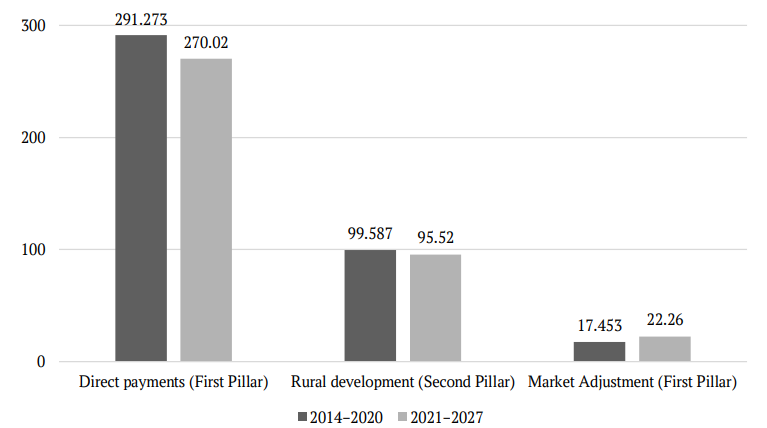
However, despite the active implementation of the CAP, the economic development of rural areas in the Baltic States is facing a number of challenges, such as a decline in the economically active population, high youth unemployment and labour shortages. At the same time, each country has its own characteristics (Tables 6—8).
Indicator | 2020 | 2021 | 2022 | 2023 | 2024 | Growth rate, 2024 to 2020, % |
Economically active population, thousand people | 430.1 | 453.0 | 469.0 | 386.2 | 389.9 | 90.6 |
The level of economic activity, % | 70.0 | 67.0 | 68.1 | 68.0 | 68.9 | 98.4 |
Employment rate of the population, % | 64.7 | 61.6 | 63.2 | 63.7 | 64.0 | 98.9 |
Unemployed, thousand people | 58.8 | 72.6 | 62.3 | 55.3 | 51.2 | 87.1 |
Unemployment rate, % | 7.6 | 8.1 | 7.3 | 6.4 | 7.2 | 94.7 |
Youth unemployment rate, % | 13.4 | 14.7 | 11.2 | 15.2 | 11.1 | 82.8 |
The need for employees, stated by employers, thousand people | 18.5 | 21.5 | 27.9 | 23.6 | 24.2 | 130.8 |
Vacancy rate, % | 2.1 | 2.4 | 3.2 | 2.7 | 2.8 | 133.3 |
Labor productivity, % | 110.4 | 120.6 | 121.5 | 118.4 | 119.0 | 107.7 |
Calculated based on the Eurostat data.24 | ||||||
Indicator | 2020 | 2021 | 2022 | 2023 | 2024 | Growth rate, 2024 to 2020, % |
Economically active population, thousand people | 574.7 | 550.0 | 580.0 | 556.1 | 581.1 | 101.1 |
The level of economic activity, % | 63.0 | 61.7 | 62.1 | 62.2 | 63.1 | 100.2 |
Employment rate of the population, % | 73.0 | 71.4 | 72.6 | 71.5 | 72.2 | 98.9 |
Unemployed, thousand people | 157.8 | 282.0 | 177.3 | 160.8 | 165.8 | 105.1 |
Unemployment rate, % | 9.2 | 16.4 | 10.2 | 9.2 | 9.3 | 101.1 |
Youth unemployment rate, % | 15.2 | 15.5 | 12.2 | 12.7 | 16.2 | 106.6 |
The need for employees, stated by employers, thousand people | 15.0 | 21.0 | 26.9 | 26.5 | 27.4 | 182.6 |
Vacancy rate, % | 1.1 | 1.6 | 2.0 | 1.9 | 2.0 | 181.8 |
Labor productivity, % | 118.5 | 125.2 | 125.1 | 120.8 | 119.9 | 101.2 |
Calculated based on the Eurostat data.25 | ||||||
Indicator | 2020 | 2021 | 2022 | 2023 | 2024 | Growth rate, 2024 to 2020, % |
Economically active population, thousand people | 307.2 | 305.2 | 316.9 | 320.4 | 352.5 | 114.7 |
The level of economic activity, % | 71.7 | 70.9 | 73.1 | 73.3 | 74.2 | 104.4 |
Employment rate of the population, % | 68.1 | 65.9 | 69.0 | 69.4 | 68.4 | 100.4 |
Unemployed, thousand people | 36.6 | 56.6 | 45.3 | 54.3 | 55.6 | 151.9 |
Unemployment rate, % | 5.0 | 7.1 | 5.5 | 5.3 | 7.8 | 156.0 |
Youth unemployment rate, % | 9.5 | 17.9 | 19.9 | 15.9 | 17.2 | 181.1 |
The need for employees, stated by employers, thousand people | 3.6 | 3.4 | 6.8 | 4.1 | 3.3 | 91.6 |
Vacancy rate, % | 1.4 | 1.5 | 2.1 | 1.9 | 1.6 | 114.3 |
Labour productivity, % | 119.3 | 127.0 | 126.5 | 115.4 | 115.8 | 97.1 |
| Calculated based on the data of Statistics Estonia.26 | ||||||
Comparative monitoring of indicators of rural economic development shows that in Latvia, despite stable employment and productivity growth, problems with unemployment, especially among young people, and a shortage of jobs remain relevant. The need for labour in rural areas of Latvia increased by 30.8 %, from 18.5 thousand people in 2020 to 24.2 thousand people in 2024, indicating a growing demand for labour. Nevertheless, the unemployment rate in Latvia decreased from 7.6 % in 2020. up to 7.2 % in 2024, which can be interpreted as a slight improvement in the labour market. However, despite the overall decline in the unemployment rate, the Latvian economy continues to face the challenge of high youth unemployment. Although it fell from 13.4 % in 2020 to 11.1 % in 2024, it remains a significant concern. At the same time, the employment rate in Latvia is relatively stable (64.0 % in 2024 compared to 64.7 % in 2020), which indicates that the employment of the population in rural areas does not experience sharp fluctuations, but continues to decline gradually in the context of labor migration and a decrease in the number of economically active population.
Lithuania, despite the increased need for labour, is facing high unemployment. In 2020-2024, the need for workers increased by 82.6 %, from 15 thousand people to 27.4 thousand people. However, the unemployment rate remained significant, ranging from 9.2 % in 2020 to 9.3 % in 2024, reflecting the problem of underemployment with increasing demand for labour resources. Youth unemployment is also a serious problem, having increased from 15.2 % in 2020 to 16.2 % in 2024. A decrease in the employment rate from 73.0 % in 2020 to 72.2 % in 2024. indicates difficulties in finding employment for the rural population. Despite the increase in labour productivity from 118.5 % to 119.9 %, the labour market remains tense, which indicates the difficulty of combining the growing need for workers with the actual provision of jobs for all categories of the population, especially for young people.
Unlike Lithuania and Latvia, Estonia shows the greatest growth in the economic activity of the rural population, increasing it from 71.7 % in 2020 to 74.2 % in 2024 (an increase of 104.4 %). However, the employment rate remained relatively stable (falling from 68.1 % in 2020 to 68.4 % in 2024), indicating some difficulty in creating new jobs, despite growing economic activity. The demand for labour increased, but its dynamics were less pronounced than in other Baltic countries. For example, the need for employees in 2024 was 3.3 thousand. people, which is less than in previous years, and indicates problems with the supply of jobs in rural areas. At the same time, the youth unemployment rate increased from 9.5 % in 2020 to 17.2 % in 2024 (an increase of 81.1 %), indicating serious problems with the employment of young people in rural areas.
It is important to emphasise that rural areas of the Baltic States have historically been dependent on the agricultural sector, small and medium-sized businesses, as well as rural tourism. However, with the decline in the number of able-bodied people and the massive outflow of young people, all these industries faced a shortage of labour. Employers in rural areas, whether farmers or small business owners, are increasingly forced to seek workers from other countries or shut down their businesses due to labour shortages. In addition, schools, shops, and medical facilities are closing in rural areas due to migration, which worsens the quality of life on the periphery and makes rural areas less attractive to the remaining residents. In turn, this creates a vicious circle where population decline leads to lower demand for goods and services, which increases economic stagnation in the regions. As a result, the outflow of labour from rural areas of the Baltic States leads to a deepening of social and economic depopulation in these areas, which further increases the gap between urban and rural areas and hinders the sustainable development of the economy as a whole. In general, all three countries face a shortage of rural labour, which poses challenges to the economic development and social stability of non-urbanised territories.
The monitoring allows us to identify both general and specific features of the socio-economic development of rural areas of the Baltic States, which reflects both the similarity of their trends due to historical and geographical factors, as well as features related to differences in economic policies, structural priorities and the level of integration into European and global processes (Table 9).
Category | Common features | Specific features |
Agriculture and natural resources | Important role of agriculture in the economy. Sustainable use of agricultural land | Latvia: high share of agriculture in GDP and steady growth of value added. Lithuania: balanced development of the agro-industrial sector with a focus on biotechnology. Estonia: smaller share of agriculture, focus on digitalization |
Demographics | Depopulation due to migration and aging of the population. Migration of young people to cities and abroad. Lower demand and higher infrastructure costs. Demographic losses are offset by innovation, digitalization, and infrastructure modernisation | Latvia: there is a more pronounced migration of young people to other EU countries. Lithuania: moderate migration rates due to government support for young families. Estonia: rural population growth is linked to the improvement of the economic situation in rural areas and the development of infrastructure |
EU Support (CAP) | Active use of CAP (EAGF, EAFRD) funds to support farmers and modernise infrastructure. Increasing the competitiveness of rural areas | Latvia: significant support for export-oriented agriculture. Lithuania: the use of EU funds for agro-industrial development, the development of agricultural processing. Estonia: implementation of digitalisation and innovation programs within the framework of Smart Rural 21 |
Environmental focus | Active implementation of EU Green Deal initiatives. Focus on biodiversity, sustainable use of resources and renewable energy sources | Latvia: an increase in the share of environmentally friendly practices in crop production. Lithuania: integration of environmentally friendly technologies into the agro-industrial sector, development of renewable energy infrastructure. Estonia: innovations within the framework of Smart Rural 21, monitoring and management of environmental projects |
Thus, the identified trends confirm that, despite the common challenges and strategic directions of rural development in the Baltic States, each of them demonstrates unique approaches and priorities determined by specific national characteristics, the availability of resources and the effectiveness of using European support. In all Baltic countries, rural development relies on innovation, environmental initiatives, and infrastructure modernisation. In particular, Latvia focuses on bioenergy and digital solutions in agriculture. Precision farming technologies and digital solutions in the agricultural sector (using drones, satellite data and IoT devices), as well as projects on the use of biogas and organic fertilizers, are actively developing in the country. European programs fund initiatives to expand Internet access in rural areas, which contributes to the development of e-commerce and remote employment. Lithuania is focused on environmental sustainability and the development of smart villages. Thanks to EU subsidies, the country is implementing programs for the transition of farmers to organic agriculture and the introduction of artificial intelligence technologies for soil monitoring. In addition, digital services are being created for rural residents to improve access to medical, educational, and administrative services. Estonia is a leader in the digitalisation of agriculture and the introduction of automated solutions. Farms are actively using robotic technologies, drones, and artificial intelligence-based agricultural enterprise management systems. The Government is also investing in the development of renewable energy sources such as solar and wind power plants, which contributes to the creation of energy-efficient rural areas.
In the medium term, the socio-economic development of rural areas in the Baltic States should take into account significant changes in the global and regional economic environment within the framework of the ATS policy, caused by the structural and technological transformation of national economies. In addition, the Baltic States are forced to adapt their socio-economic strategies in the face of changing geopolitical and geo-economic realities. Such changes affect not only foreign trade but also the internal economic structure of rural areas. For example, increasing uncertainty in international markets, changes in EU policy, as well as the increasing impact of external economic sanctions and trade barriers, are forcing countries to look for new markets and develop alternative export-oriented agricultural products. In such conditions, for the effective development of rural areas, it is necessary to develop individual strategies that can take into account local features, trends in technological change and external economic challenges. Local authorities should adapt national strategies, coordinate programs and support infrastructure, businesses should innovate and create jobs, scientific and educational institutions should develop new technologies and train specialists, European foundations should provide financing and support for projects, and local communities should be involved in decision — making and implementation of initiatives. The joint efforts of these entities will ensure the sustainable development of rural areas, which, in turn, will help prevent migration from rural areas to more urbanised regions. The main promising areas of socio-economic development of rural areas of the Baltic States are shown in Table 8.
Direction | Characteristic | Result | Effect |
Development of rural entrepreneurship | Creating conditions for the growth and support of small and medium-sized enterprises, and the introduction of new business models | Increase in the number of jobs, stimulating the local economy | Decrease in unemployment, increase in local economic activity |
Digitalisation of rural areas | Development of digital platforms and Internet services for rural populations | Access to digital services for residents, improved communication and interaction | Increase in the availability of educational and medical services, improving rural life |
Development of the green economy and eco-technologies | The introduction of innovative, environmentally friendly technologies in agriculture and production | Sustainable development, creation of ‘‘green’’ jobs | Increase in the sustainability of the economy, attracting investments in environmental projects |
Attracting investments to rural areas | Creation of infrastructure to attract investors to rural areas, and improvement of business conditions | Development of new economic sectors in rural areas | Sustained economic growth, reduced migration to major cities, and improved quality of life |
Sustainable development of agrotourism | Development of tourism based on natural and cultural resources, integration of rural areas into the tourism industry | Increased attractiveness of rural areas for tourists | The growth of tourist attractiveness and the development of related industries (hotel business, trade) |
Infrastructure modernisation | Development of transport and social infrastructure: roads, communications, schools, hospitals | Improved living and working conditions in rural areas | Reduction in migration to cities, improving the quality of life in rural areas |
Developing sustainable supply chains | Creation of local and regional supply chains for agriculture and manufacturing industries | Reduced dependence on external supplies, increasing local production | Resilience to external economic and political risks, strengthening local markets |
Social support for the population | Programmes aimed at improving social support, healthcare and education in rural areas | Improved quality of life and education in rural areas | Elimination of social inequality, improving the level of education and healthcare |
In general, the implementation of these areas will strengthen the sustainability and competitiveness of rural areas in the Baltic States, ensuring their integration into the EU’s pan-European sustainable development and green policies. An effective combination of traditional and innovative industries, investments in infrastructure and business support will contribute to the sustainable development of rural areas and increase their competitiveness.
Conclusion
The research showed that, despite many external and internal challenges, rural areas of the Baltic States have significant potential for sustainable development and improving the quality of life of local communities. Although EU resources are actively involved in the development of agriculture, their impact on the labour market and the unemployment rate remains ambiguous. Nevertheless, financing agriculture contributes to its modernisation, which in the long term can have a positive impact on the rural economy. Special attention is paid to such aspects as the introduction of innovative technologies, support for environmental initiatives and infrastructure development, which contributes not only to improving living conditions in rural areas but also to strengthening their positions in international markets. Digitalisation programmes, sustainable agriculture, and the creation of conditions for social inclusion and human capital growth are the most important development vectors that contribute to reducing social and economic instability in these territories.
However, despite the positive trends, it is necessary to take into account existing problems, such as low investment in infrastructure and insufficient access of rural populations to modern technologies and services, which requires further work to optimize policies aimed at developing non-urbanised territories in general, with an emphasis on their integration into common European processes. For example, Estonia is actively developing an initiative to improve digital accessibility in rural areas, which allows local authorities to create ‘‘smart’’ villages and improve the quality of services provided. In Latvia and Lithuania, the Ministries of Economy, Agriculture and Regional Development are developing national programs to improve infrastructure and develop agriculture, including the use of European subsidies for infrastructure modernisation and the introduction of innovative technologies. It is also important to continue working to reduce inequality and ensure equal opportunities for all segments of the population, which will become the basis for their sustainable and harmonious development. In addition, strategies for the socio-economic development of non-urbanised territories should take into account new challenges associated with changes in the external economic situation, sanctions, and increased economic mosaic, which will require flexibility in decision-making at both the regional and national levels. The prospects of the study are to further analyse and develop flexible strategies aimed at reducing social and economic inequality in rural areas, which will become the basis for sustainable and harmonious development of the non-urbanised territories of the Baltic States. It is important to take into account the impact of global changes, which requires adaptability at all levels of government, from local and regional authorities to the national level. It is also of interest to evaluate the effectiveness of government support programmes aimed at sustainable rural development. Equally important is the study of issues of social justice, equality and accessibility of social services, which also has a significant impact on the sustainability of the development of non-urbanised territories in general.
Reference