Trajectories and problems of the current spatial development of Russia’s European Near North regions


Abstract
This article employs a comprehensive economic and geographical approach to examine the extensive European segment of Russia that extends north of the Moscow region – the area commonly known as Blizhny Sever (Near North). New challenges require an improvement of Russia’s spatial development strategy. The case of the region is used to illustrate the possibility of a multiscale approach to identifying socioeconomic contrasts within regions and describing the interdependent development of their parts. The study analyses population change trends from 1990 to 2022 alongside the territory’s migration patterns, employment trends and infrastructure development. The spatial approach is crucial in this context, owing to the natural variations within the macroregion, the suburban-peripheral contrasts and the growing role of the central cities. The study closely examines the eastern part of the macro-region, from Yaroslavl to Kirov. The compression of developed areas and the degradation of essential living conditions have been the most pronounced trends in the post-Soviet period, along with organisational and economic changes in key economic sectors. The study also explores how the impact of regional centres on surrounding areas changes with distance. It places emphasis on the shifting paradigm of agricultural land use under new institutional and economic conditions, the increasingly patchwork character of farming and the implications of the focus on animal husbandry. The work relies on analysing municipal-level statistical information and the extensive use of maps. Identifying both relatively successful and highly problematic areas within this vast macro-region can aid in devising new visions to enhance national and regional spatial development strategies.
Problem statement and previous research
One of the main and widespread problems of Russia with its vast space and a relatively sparse network of large cities is the centre-periphery socio-economic differences [1]. The depth of these differences is often underestimated, especially in studying the development of Russia at the level of its regions, including in the adopted Strategy for the Spatial Development of the country and its regions until 2025. Its disadvantages are largely related to the focus mainly on regions and large centres and the lack of a multi-scale approach to solving problems [2]. This is especially true in regions with diverse and complex natural conditions, and relatively sparsely populated, where the influence of centres leads to many types of problems within regions that determine the development of both centres and peripheries. In addition to the eastern regions of Russia, these include the old-developed regions of the Near North of the European part of Russia.
The Near North of Russia is the vast territory of the Non-Chernozem region, characterized in the past, in addition to forestry, by relatively sparse agricultural development and animal husbandry, and now it is largely subject to desolation, as a result of depopulation and curtailment of key activities. The agricultural development in pre-Soviet times and during the Soviet period distinguished the Near North from the Far North, where the use of minerals and forest resources was and remains the basis of management. The term “Near North of Russia” was proposed and justified by geographers [3]. With a certain degree of conditionality, it can include regions north, northwest and northeast of the Moscow region from the Pskov and Tver regions to Vologda and Kirov.
The Near North of the European part of Russia has enormous natural potential — a huge territory, forest and water resources, and relatively high biodiversity. At the same time, this is a very problematic macroregion in terms of economic “compression” in space, depopulation, social depression and exclusion of the rural population. Back in Soviet times, the population in rural areas was declining and more and more abandoned houses appeared here. Collective-farm and state-farm agriculture in most of the territory existed due to huge subsidies. With the departure of Soviet agricultural and timber enterprises, which supported not only the economy of the regions but also infrastructure and employment, the decrease in social and economic activity zones accelerated. This is largely due to the shift in modern market conditions of agricultural production to more southern regions with favourable natural conditions for agriculture, as well as the transformation of the timber industry. All this stimulated the departure of the population from rural areas and small towns [4], [5]. The emergence of new technologies at the preserved enterprises of agriculture and forestry, requiring the involvement of a much smaller number of employees, only increased the outflow of the local population, especially since the centres of the regions, not to mention Moscow and St. Petersburg, both in Soviet and post-Soviet times attracted the population from the surrounding territories [6]. At the same time, the forest resources and ecosystem functions of the region remain important. The lack of economic mechanisms for reforestation and “predatory” forest management in many places has led to a significant depletion of economically available forest resources, and the richest natural and ecological potential of the territory is largely not in demand [7]. The accumulated cultural potential in this old-developed region is no less important and is being lost.
The Spatial Development Strategy of Russia until 2025 provided for the acceleration of the country’s economic growth through the development of promising centres. There are no in the macro-region most promising centres with annual economic growth of more than 1 %. Nevertheless, for most of the centres in this region, the Strategy assumed an increase of 0.2 to 1.0 %. Economic growth of < 0.2 % was predicted only for Kostroma and Kirov. At the same time, the macro-region, which concentrates 6.5 million people, is characterized by a sparse and very contrasting socio-economic space, a high and increasing concentration of the population in the centres of the regions, insufficient transport connectivity and, in general, significant infrastructure constraints. In a macro-region with such a high role of central places in an increasingly sparse socio-economic space [8], [9], a geographical approach that identifies the most problematic territories is especially important. The question has been repeatedly raised that the processes of “social desertification” outside the regional centres must be stopped, if not stopped, then at least achieve “regulated compression” [3], [10].
Despite the relative compactness of the macro-region, it is characterized by a wide variety of internal problems. This article examines the eastern part of the Near North from the Yaroslavl region through Kostroma, Vologda to the Kirov region. The strong socio-economic contrast of this territory at the municipal level requires a comprehensive geographical study of various indicators and processes — from the degree of development of the territory to population migrations and the economy in their interaction. The article is of a reconnaissance nature, identifying only some key problems of spatial development at the municipal level, the analysis and determination of solutions to which need further study.
The main modern problem of the Russian Non-Chernozem region remains strong rural depopulation, a steady outflow of young and active population to cities, and the abandonment of villages [11]. For the Tver, Yaroslavl, and Vologda oblasts, these aspects were considered in detail at different scale levels [12], [13], [14], [15]. Nevertheless, these processes are not unique to the studied regions and even to Russia. In the twentieth century, they have also been observed in many European countries. However, there is reason to believe that urbanization in Russia has not been completed [16]. The population tends to the centres and closer to them [17], [18], [19]. Combined with a relatively sparse network of large cities, especially characteristic of the Near North, this leads to the devastation of vast territories. In addition to their own regional centres, the most “powerful pumps” are located south and northwest of the macro-region, pulling the population — Moscow and St. Petersburg. This has created and continues to strengthen contrasts between the centres and the periphery of the regions, although rare “growth points”, based on their own resources or with the help of the arrived population [20], [21], appear at a distance from large centres. In recent decades temporary return migrations (dachas) between cities, especially large ones, and rural areas are becoming more and more obvious, most evident near Moscow and St. Petersburg, but characteristic also for the regions of the Near North [22], [23].
The considered regions are often positioned both in the scientific literature and in public opinion as a zone of socio-economic depression with shrinking agricultural lands, the abandonment of which is often perceived as a tragedy. Indeed, between half of the cultivated land in the Vologda and Kirov regions and up to 70 % in the Kostroma region has fallen out of circulation. These are primarily lands with reduced fertility and those located far from urban centres [24], [25]. At the same time, parallel processes of concentration of agricultural production [26] largely compensate for the food supply of cities and districts. There is a spontaneous overgrowth of abandoned lands with low-yielding and fire-hazardous forests. The transition from extensive to intensive forest management can be a way out for such areas, similar to Finland and Sweden, taking into account the potential of forests grown on abandoned agricultural lands.1
Materials and methods of research
Using the example of four regions in the eastern part of the Near North (Yaroslavl, Kostroma, Vologda and Kirov regions), the article examines socio-economic changes from 1990 to 2022 and modern spatial natural and socio-economic contrasts of the territory. The study was based on official statistics on municipalities of the Federal State Statistics Service (Rosstat) of Russia. Data on municipal districts and municipal okrugs (including small towns) were used, reflecting the density of population, different types of migration, infrastructural development, employment in forestry and agriculture, the level of salaries, as well as some indicators of the transformation of agriculture: changes in acreage and livestock, the degree of concentration of livestock and others. Urban districts were considered separately as units that affect municipal districts. At the same time, the study was based on the author’s experience in long-term study of some regions. Drawing up maps in the context of municipal districts and graphs showing different natural conditions and socio-economic indicators from the centre to the periphery made it possible to visually present the modern inter-regional and intra-regional contrasts and their changes.
The results of the study
The specifics of the influence of natural differences and large cities
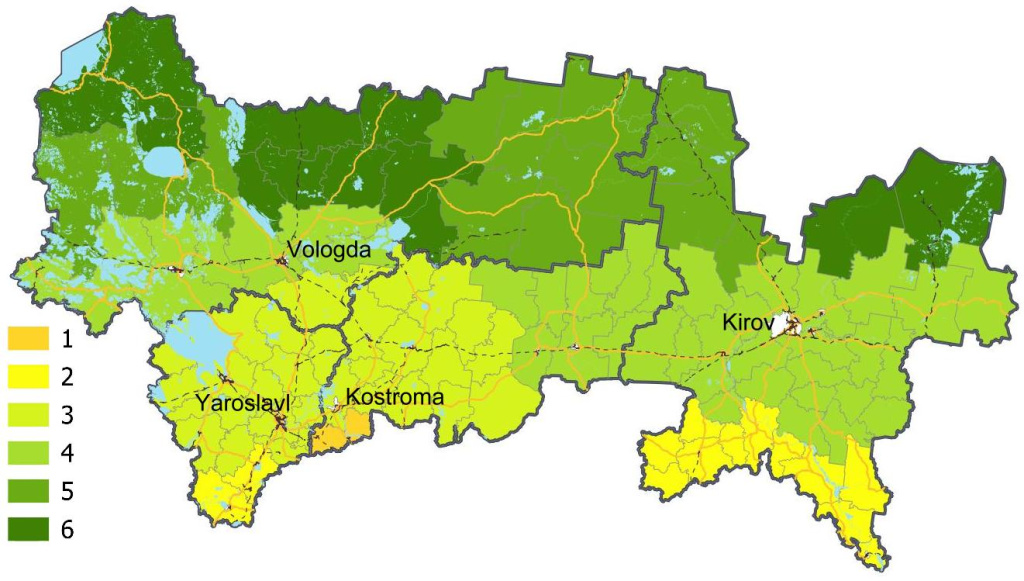
The main vectors of the organization of the space in the regions of the Near North and its changes over 30 years, like many regions of the Non-Chernozem macro-region, can be conditionally associated with natural prerequisites and remoteness from large cities [5]. An indicator of natural conditions, including agriculture, which played a significant role in maintaining rural areas and supplying cities with food in pre-Soviet, Soviet times and continues to play in modern conditions, although differently, are differences in bioclimatic potential (long-term values of the sum of temperatures above 10 degrees with combinations of precipitation and evaporation). Figure 1 clearly shows these differences between the south and north of the macro-region, although they do not always have a strictly latitudinal direction.
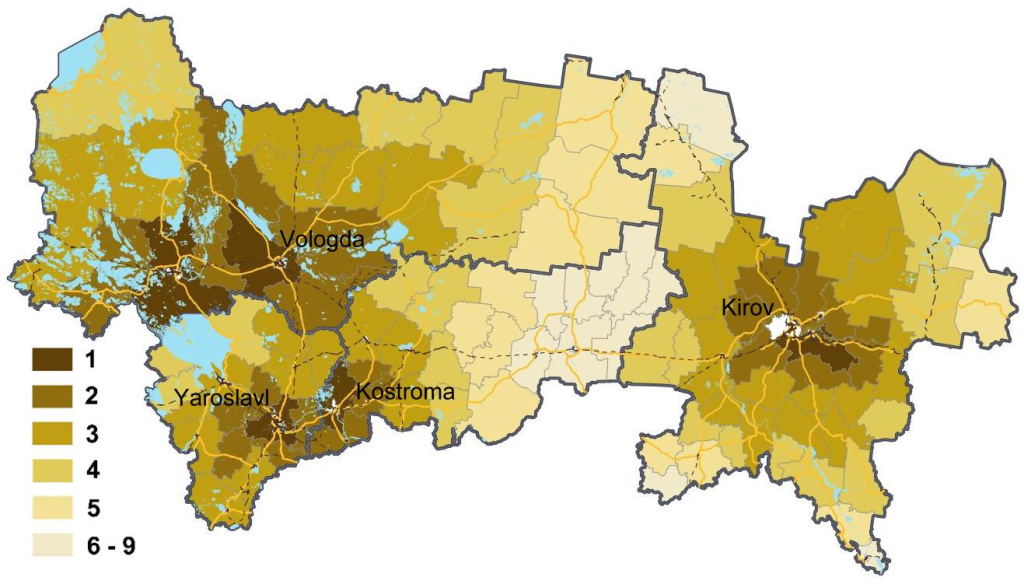
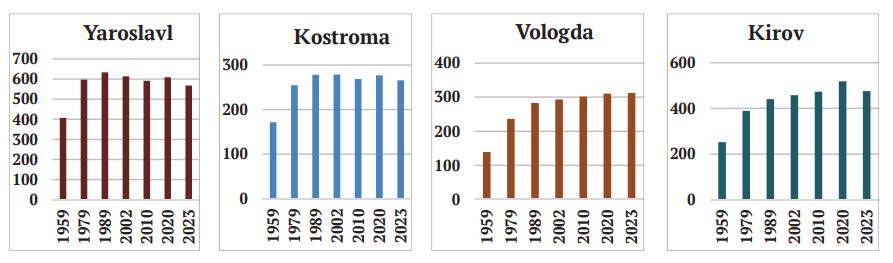
The influence of large cities, especially regional centres most clearly affects the suburbs, that is, adjacent municipal areas, but not only. The conventionality of the map in Figure 2 is that the degree of influence on the surrounding area depends on the population of the centre of the region, the density of the population, as well as the characteristics and configuration of the municipal division of each region. But one way or another, the degree of influence, as a rule, decreases from the suburbs of the regional capital to the periphery of the region [11], forming extensive zones in this macro-region, remote from all centres. The centres themselves also differ: from the largest Yaroslavl (Fig. 3), whose influence is enhanced by its comparative proximity to Moscow, to the weakest — Kostroma. The Yaroslavl region has a second large city, though noticeably losing its population, Rybinsk (184 thousand inhabitants). The influence of Vologda is strengthened by the nearby Cherepovets, which is approximately equal to it in terms of population and very stable in terms of population dynamics (300 thousand inhabitants), therefore, not only the Vologda district but also the Cherepovets district is classified as a suburban area. Small and medium-sized cities in the region are catastrophically losing their population and, as a rule, forming local zones of influence. Nevertheless, 17 small and medium-sized cities of the Kirov region with a total population of 380 thousand people in 2022 (in 2002 their population reached 620 thousand people) form a certain framework of the territory. The most difficult situation is observed in the Kostroma region, whose territory stretches to the northeast, and 11 small towns have a total population of 150 thousand people (217 thousand in 2002).
Intraregional socio-economic contrasts of regions
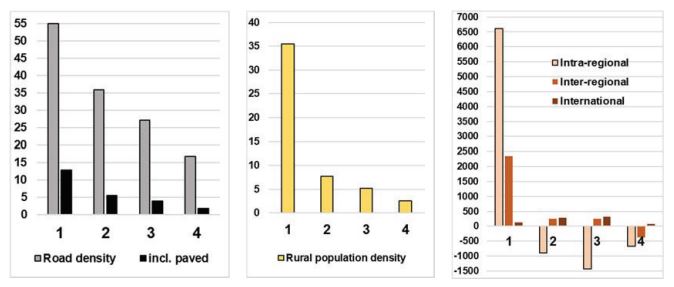
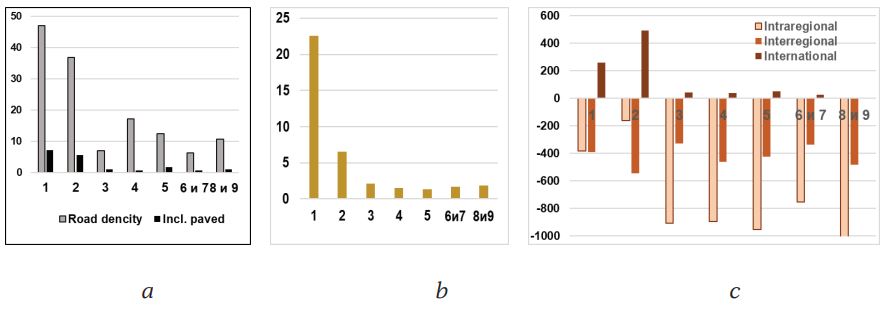
The influence of cities affects primarily the development of the territory and the density of the rural population. For example, in the Yaroslavl region (see details [14]), the density of roads, especially paved ones, decreases markedly from the suburbs to the periphery (Fig. 4, a). The rural population density is also maximum in the suburbs of Yaroslavl (Fig. 4, b). At the same time, the suburban area is attractive for all categories of migrants, including interregional ones (Fig. 4, c). As a result, only in the suburban Yaroslavl district, the population increased by 10 % in 2018—2022 due to migration, despite the fact that in all districts of the region (including suburbs), the mortality rate is higher than the birth rate.
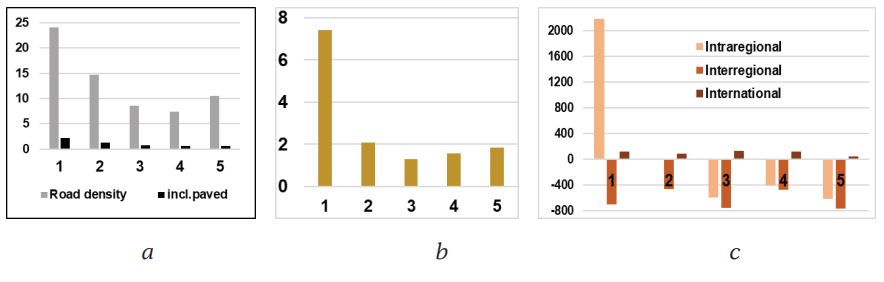
In the Vologda Oblast, two centres of equal population size form an extensive zone of influence (Fig. 2), attractive to intraregional migrants (Fig. 6, c), which leads to increased population concentration not only in the centres but also in the suburbs of Vologda and Cherepovets (Fig. 6, b), although not as strong as in the previous two regions. At the same time, the natural decline is so great that the population is decreasing even in the suburbs, not to mention the rest of the region. The density of roads with improved pavement even in the suburbs leaves much to be desired (Fig. 6, a).
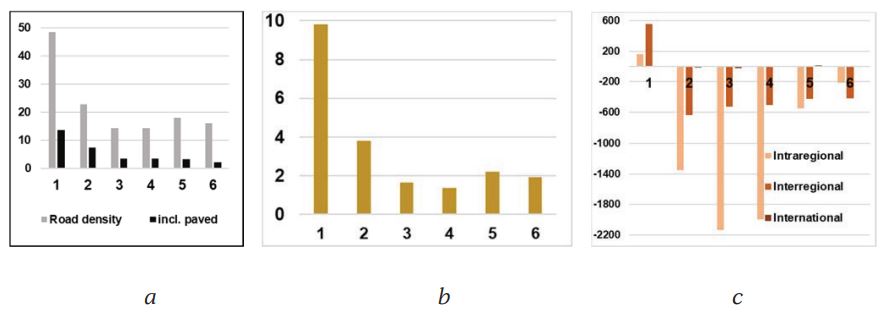
Differences between suburbs and peripheries are observed in the Kirov region (Fig. 7), although southern districts have more favourable natural conditions (Fig. 2). In the southern half of the region, both the population density and the density of roads are higher. Nevertheless, all districts have a negative migration balance, except for the suburbs, and even the southern municipal districts have lost 10 % of the population over the past 5 years due to natural attrition and migration outflow.
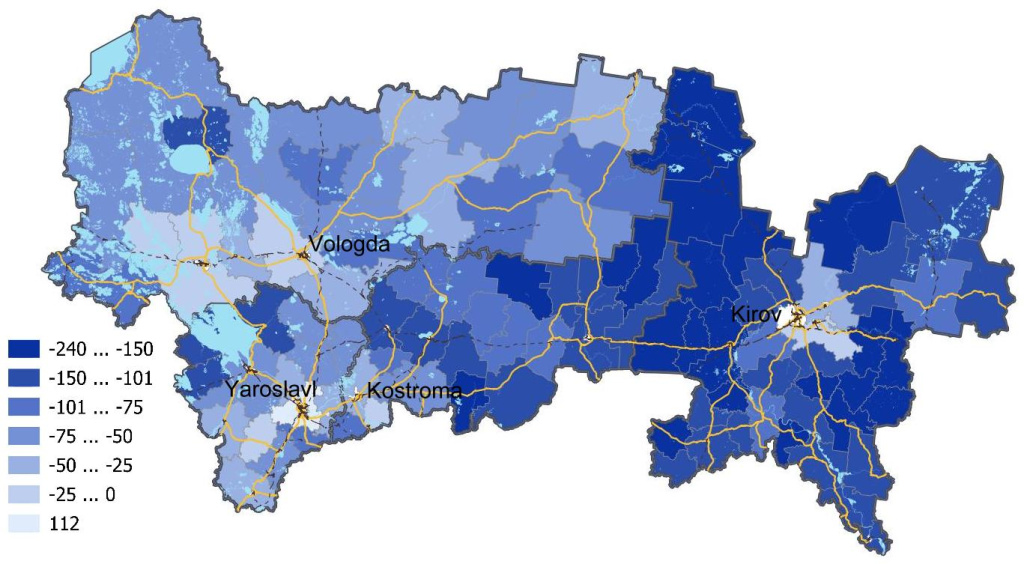
The sum of migration outflow and natural population loss as a result of excess mortality over fertility in 2018—2022 shows the real compression of the social space of the macro-region. This compression is typical for almost the territory outside the suburbs of Yaroslavl. However, it is maximum in the outlying districts in the Kirov and Kostroma regions, even with relatively favourable natural conditions (the agricultural south of the Kirov region, as well as the formerly more densely populated agricultural lands in the northeast of the Kostroma region). The scale of these losses is most evident when calculated per 1000 inhabitants (Fig. 8). Thus, the outlying districts of the Kirov and Kostroma regions lost every fourth or sixth inhabitant in 5 years, which allows us to imagine the speed of further processes of devastation of the territory. In the Yaroslavl region, its northwestern suburbs are the most disadvantaged. The Vologda oblast is characterized by much smaller scales and contrasts in general, although population decline is typical for all districts.
The migration behaviour of the population outside the regional centres depends on many factors: differences in living conditions, the ability to find work, spatial contrasts in wages, etc. As indicators of the living conditions, in addition to the density and quality of roads (Fig. 4—7), can also serve the availability of pipeline gas and water supply in rural and even small urban settlements. For example, according to Rosstat, in the Yaroslavl region even in the suburban district, 70 % of rural settlements do not have pipeline gas, and in the north of the region their share reaches 95 %. From 80 to 95 % of rural settlements are not provided with centralized water supply there. In the suburbs of Kostroma, the situation is better — half of rural settlements have pipeline gas and water supply. However, starting from the municipal districts — Kostroma’s neighbours of the 3rd—4th and subsequent orders — the share of villages with piped gas drops to 0 %, and with piped water supply — to 20 %. The only exception is Sharya, the second most populous town and an important timber industry centre in the east of the region.
However, the main incentives for the departure of the population, especially in the post-Soviet period, were the reduction of jobs due to the closure of a number of enterprises in small towns and rural areas as well as technological and organizational changes. The difference in the level of average salaries in regional centres and other municipalities is also important. The greatest contrasts in the level of wages are typical of the Kirov region: between the capital, a powerful and strengthened machine-building centre in recent years, including the military-industrial complex, and the rest of the municipal districts of the region. Only in the suburbs, it reaches 50 % of the level of the centre, and in other areas it ranges from 38 to 48 %. As a result, the population of Kirov has been growing recently. In 2022 alone, it increased by 4.4 thousand people. (by 0.8 %). Modern Kostroma is one of the weakest regional centres of the macro-region under consideration with lower wages in the city. Nevertheless, it still stands out compared to the municipalities in the region, where salaries fluctuate between 50—67 % of those in the regional centre. The exceptions are the Krasnoselsky district with its specialization in gold products and the Galichsky district with its powerful livestock and timber industry complexes. In Kostroma, the population continues to decline (1.6 thousand in 2022). Salaries in the municipalities of the Vologda region are more even, including due to the relative stability of the timber industry, and range from 60 to 90 % to the regional centre, and in the Cherepovets district salaries are higher than in Vologda. In the Yaroslavl region, municipal salaries range from 63 % of the regional centre’s level in the northern Poshekhonsky district to 94 % in Rybinsk. In the suburban areas, salaries are even higher than in Yaroslavl, reaching 106 % of the centre’s level. In Yaroslavl, with a population of 571 thousand inhabitants, there is a small migration outflow related to the processes of suburbanization.
Post-Soviet transformation of the background sectors of the economy
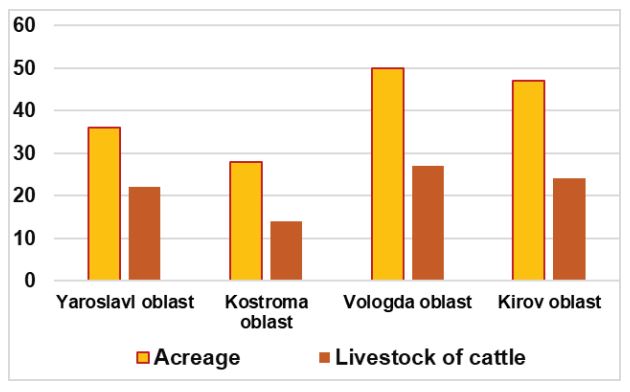
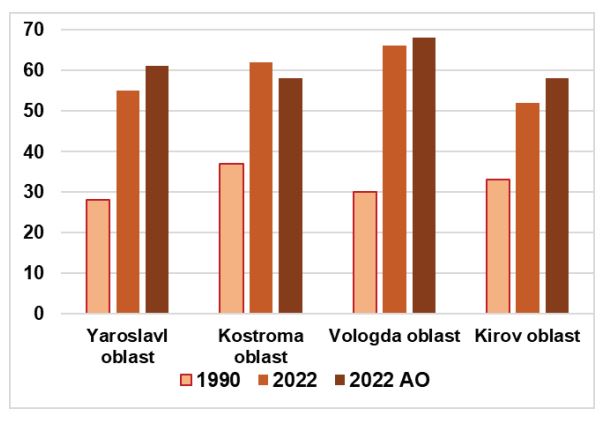
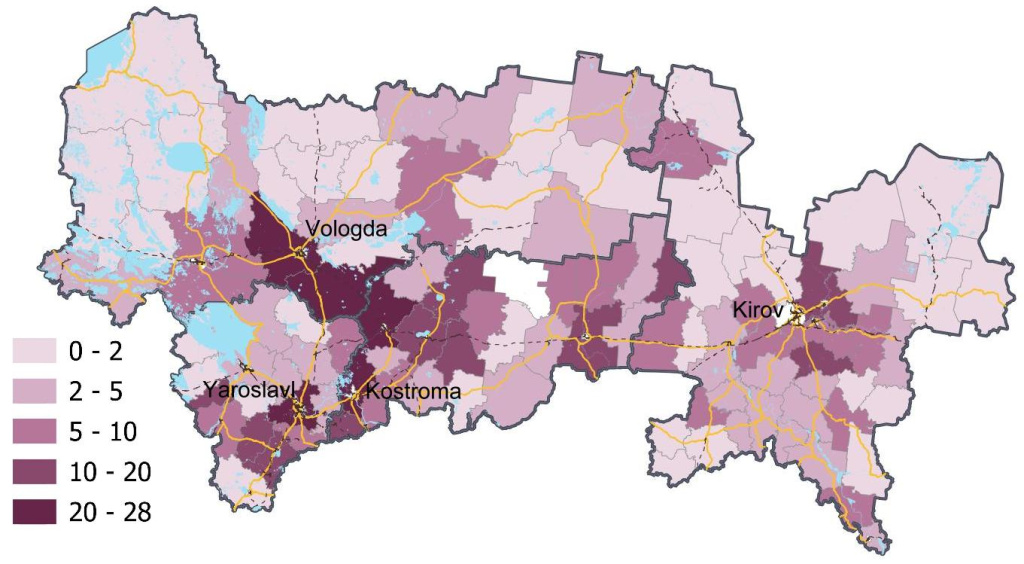
Job loss, combined with the lack of alternative employment outside major cities and low wages, is a key factor driving population outflow. The problems of the Non-Chernozem region have accumulated in Soviet times [4], a sharp decrease in huge subsidies to agriculture since the 1990s and the transition to market economy led to a strong compression of agricultural land and to significant decrease in livestock numbers in all regions under consideration (Fig. 9). At the same time, livestock technologies changed, which led to a strong territorial concentration of livestock and poultry at large enterprises often within the framework of agro-industrial complexes (Fig. 10). As a result, most of the livestock, pigs and poultry, instead of the previously relatively uniform distribution across municipal districts in collective farms and state farms, concentrated now in separate foci. If in the 1990s, 30—35 % of cattle were located in 20 % of municipal districts (typically two or three districts in the region), by 2022, 60—70 % of cattle were concentrated in the same 20 % of districts (Fig. 11). More often these are suburban areas and locations of large livestock complexes. The acreage also shrank into small foci: closer to Rostov and Yaroslavl, around Vologda and Cherepovets, in the south-west of the Kostroma region. In Kirov region, in addition to the areas surrounding the capital, they are located in the southern districts with more favorable natural conditions in (Fig. 12).
The consequence of these processes was a massive reduction in employment in agriculture at enterprises. Jobs have been preserved and sometimes expanded (although not much due to automation of production) mainly in areas where large agricultural holdings are located. However, the latter often prefer to hire migrants from CIS countries for unskilled work.
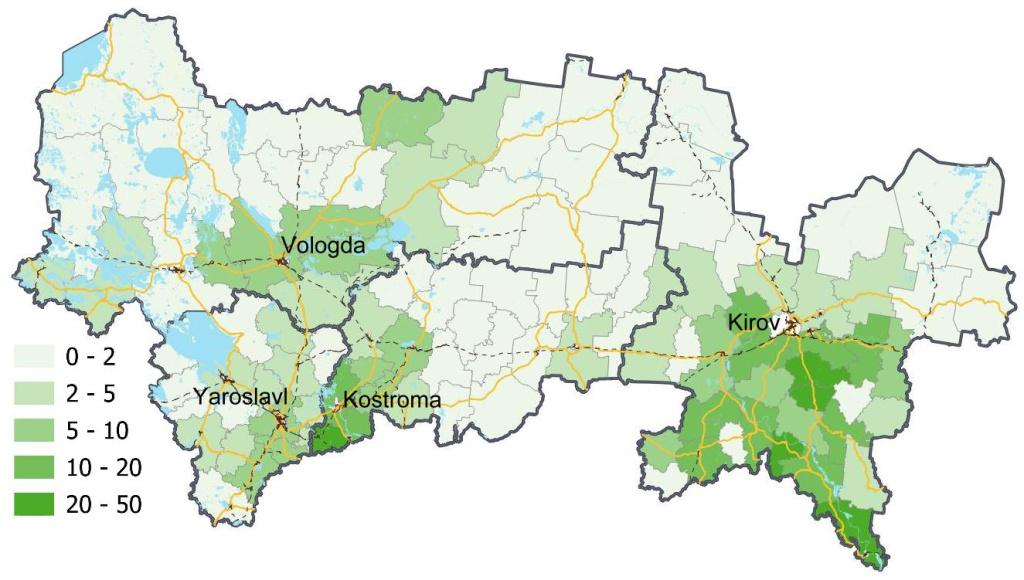
In all the regions under consideration, the share of acreage in the total land area has significantly declined and continues to decrease as the distance from the suburbs to the regional periphery increases. The maximum losses in the post-Soviet years occurred precisely in areas remote from the centres. The only exception is the Kirov region, where the southern agricultural areas remain relatively prosperous so far. Nevertheless, the sharp contrasts in living standards between the regional centre and the periphery, including the southern one, and the decrease in the rural population raise questions about the sustainability of agricultural production even in the areas with the most favourable natural conditions.
In many areas, especially in the Vologda, Kirov and Kostroma regions, the forest remained one of the main resources of the economy and areas of employment outside the regional centres. However, after the transformation of Soviet forestry enterprises and the abandonment of part of forest roads, the availability of forests decreased and logging shifted to highways. The forest industry is also characterized by increased concentration around large timber processing enterprises, which now prefer to harvest wood from more accessible areas compared to the Soviet era. The transition to forest leasing and the use of modern equipment in logging, which requires significantly fewer personnel and specialized training [27], has also contributed to a decline in employment.3 This reduction in forestry jobs has been further exacerbated by changes in the Forest Code, which have sharply decreased the number of foresters and other forest protection services.
As a result, the share of people employed in agriculture and forestry—primarily the main sectors of employment outside large cities in this macro-region—has decreased in the post-Soviet period. In most areas beyond the influence of large agricultural holdings and logging enterprises, this share is now less than 10—15 % (Fig. 13).
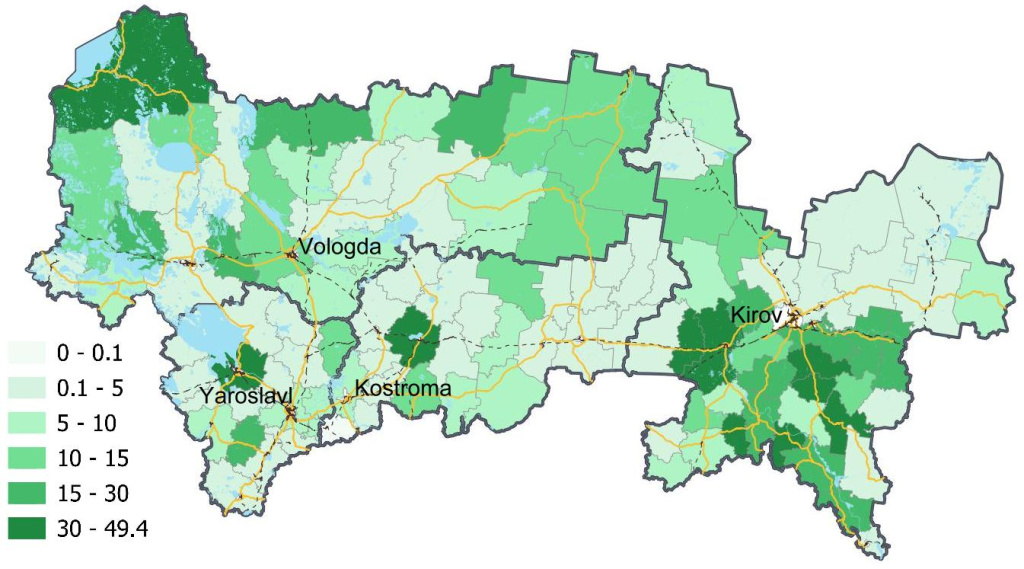
However, other types of employment have undergone significant changes, which has become an additional trigger for the departure of population. This is primarily due to the all-Russian program of consolidation of municipalities [28]. Despite the ‘good goals’ of the municipal reform to equalize incomes and meet budget obligations, its consequences for population dynamics have become catastrophic, especially in the regions of the Near North. For example, the number of grassroots management units decreased 3.4 times from 2000 to 2020 in the Yaroslavl region, and 2.5 times in the Kostroma region [29]. The reform led to a massive reduction (‘optimization’) of employees of administrations, as well as schools, hospitals, FAPs, clubs, etc. and, consequently, to a reduction in the number of jobs in rural areas and the social sphere and their concentration in larger settlements. This, along with a severe shortage and poor quality of roads (excluding federal highways and major regional routes), has prompted the departure of not only young people but also families with children and the elderly population from rural area to big cities.
With significant losses of the able-bodied population, the development of small-scale private farming also faces challenges. In remote and more northern areas, it is associated with small private logging companies that lease wood to large processors, for example, to the SWISS KRONO plant in the east of the Kostroma region, which produces chipboard and does not impose increased requirements on raw materials. In addition to its own logging, the company accepts substandard wood from small-scale loggers. Small private companies also harvest firewood for the population in the absence of centralized heating.
The share of households in food production and farms in general is small, although it increases from the suburbs to the periphery of the regions (including for survival purposes). In Soviet times, collective farms helped private subsidiary farms, partially providing them with animal feed [11]. Now everything depends on human capital, primarily on the age of the remaining population and their desire to live in the countryside.
However, there are areas where a historically strong private economy has developed—typically in regions with more fertile soils among forests—that are still somewhat maintained today. This includes the Rostov district of the Yaroslavl region, situated on the sapropels of Lake Nero, as well as the Vokhomsky and Bogovarovsky districts in the eastern Kostroma region, known for their better-drained soils, and parts of southern Kirov region, among others. Nevertheless, the most noticeable increase in the share of small-scale private farming is typical only for areas that have better preserved the population or for areas that significantly ‘cut off’ from active life. However, there are also deviations from the typical transformation processes of a private economy. This is often due to the relocation of the urban population, ready to realize themselves in new rural conditions. Compared to the mass departure from rural areas to cities, this is a ‘drop in the ocean’, but very noticeable in the media world. Examples are the Bolsheselsky district of the Yaroslavl region, where an entire community of former urban residents was formed, and the Tarnogsky district of the Vologda Region [20]. These examples show spontaneously emerging new ways of adapting urban populations to local conditions and are very interesting to study.
State measures are also being taken to support peripheral territories and improve living conditions in rural areas. Within the framework of the Federal program “Integrated Rural Development until 2031”, the Ministry of Agriculture of the Russian Federation proposed to implement 397 projects throughout the country in 2022—2025, including “commissioning of gas distribution networks and connection to gas supply, commissioning of centralized water supply networks, improving educational conditions, receiving primary medical care, receiving cultural and leisure services.” However, these projects cover only 0.8—1.2 % of the rural population per year and primarily concern areas that have retained their population.
A special type of development of remote rural areas is associated with the temporary use of rural houses by citizens. We are talking not only and not so much about garden associations in the suburbs, forming vast, densely populated one- and two-storey ‘semi-towns’ around regional and other urban centres, as well as in municipal areas adjacent to the Moscow region (Pereslavsky, Uglich in the Yaroslavl region). In recent decades, a significant role in the “revival” of the regions of the Near North in the summer season, especially at a short distance from the main transport routes, has been played by distant dachas of Muscovites and residents of other large cities who are ready to buy houses in villages up to 500—600 km from Moscow and spend several weeks to several months there in the summer season [22]. The reliability and duration of such use remain questionable, but the ‘smouldering’ life of small villages is supported by the townspeople, offering work to local residents on the arrangement of houses and plots, buying products from their personal subsidiary farms and generally creating, albeit seasonally, a more active social environment [3], [30].
Conclusion
In regions such as the Near North of Russia, identifying optimal ways to utilize natural resources and the diminishing human capital outside of large cities and suburbs represents a crucial scientific and practical challenge. This task includes the development and enhancement of the Spatial Development Strategy of Russia, especially in light of the directive from the Prime Minister of the Russian Federation to formulate a new concept. The Strategy should encompass not only the various forms of territorial organization of society and the economy but also an understanding of the relationships among different types of territorial units at various scales [2].
It is essential to consider not only interregional but also intraregional contrasts among territories, which vary significantly across different parts of the country. The primary tasks for the development of the regions of the Near North, characterized by shrinking populations and concentrated economies, are closely tied to new social and economic realities. Accordingly, the Spatial Development Strategy of these regions should contain answers to difficult questions. Is it possible, with the desire of the population to the centres, to find ways to slow down or suspend the compression of the developed space? How can we preserve the living and working conditions necessary for the modern needs of the population in small towns and rural areas, so that large cities with their accumulated economic, demographic and cultural potential do not remain ‘cathedrals in the desert’ in these areas as a result?
The trends of socio-economic changes in the spatial dimension presented in the article and the identification of municipal areas with both successful solutions to urgent tasks and the most acute socio-economic problems are only one of the first steps of research on this path. The analysis of different combinations of natural, human and economic capital in different municipal areas has shown various examples of modern adaptation of the population and economy of the regions of the Near North to new socio-economic realities. The analysis presented in the article shows that modern business and the population, in the presence of common patterns, still react differently to the changes of recent decades. This is clearly illustrated by the example of the Vologda region, which, despite being further north than Kostroma, has managed to better preserve its population and jobs. These examples require a deeper scientific analysis, which will reveal the specifics of the regions, their social, economic and geographical differences and the most pressing problems.
This is important for formulating wishes to government bodies of various levels, including municipal and settlement, on geographically differentiated measures of financial (budgetary), organizational, and infrastructural, including transport, and support. It should be noted that the announced applied programmes for the ‘restoration of rural settlements’ or ‘return to the circulation of lost agricultural land’ in these territories are most often put forward in the political field and are based mainly on the reproduction of the economic base and human capital that existed in the past, which is not feasible in modern conditions.
This article proposes an approach to the comparative analysis of various municipal units, considering both external and internal prerequisites and opportunities, as well as existing challenges. It highlights the role of municipal districts within the broader system of socio-economic relations. This framework aims to facilitate the development of diversified, scientifically grounded solutions that account for the geographical location, natural resources, economic conditions, and social constraints of specific territories in comparison to others.
The research was carried out at the Institute of Geography of the Russian Academy of Sciences with the financial support of the Russian Science Foundation project № 24-17-00129 “Prospects for socio-economic and nature-saving development of the Near North of Russia”.
Reference