National innovation systems: a comparative study of the Baltic and South Caucasus States


Abstract
This article aims to identify the determinants of the development of national innovation systems in the globalised world and to carry out a cluster analysis of innovation systems of the South Caucasus and Baltic States. To this end, an Innovation System Development Index (ISDI) comprising 46 indicators was developed. The authors employed the macro-clustering method, as well as aggregation and combination techniques for parameters and sub-indices. Additionally, complete-linkage and K-means methods were used to group the countries. Kalinsky-Kharabaz and Duda-Hart indices, as well as dendrograms, were found to be the most effective techniques for producing the novel classification proposed in this contribution. It was demonstrated using the former method that national innovation systems exhibit qualitatively different cluster characteristics and follow different development trends. According to the findings, Estonia ranks first on the index among the study countries with (ISDI = 0.77), while the South Caucasus states form two subgroups. Armenia (ISDI = 0.50) and Georgia (ISDI = 0.53) comprise a relatively developed subgroup, whereas Azerbaijan (ISDI = 0.44) constitutes a separate unit, delivering a less remarkable performance. The latter method revealed that the Baltic States form the most developed cluster group, with Estonia once again at the top of the index (ISDI = 0.85). The Baltic States and the South Caucasus states comprised two separate groups. Except for the patent activity sub-index, Estonia outperforms the other study countries on all sub-indices. Armenia and Georgia rank relatively high on the patent activity sub-index, whereas Azerbaijan performs well on the innovation activity and infrastructural development sub-indices. These findings would allow the South Caucasus countries to draw on the experience of the Baltic states in identifying challenges to the development of their national innovation systems. Overall, the study demonstrated the possibility of classifying the countries of the two post-Soviet regions based on the similarity of national innovation systems.
Introduction
Innovation is the cornerstone of success in the modern economy at firm, industry, regional, and national levels [1, p. 1]. According to Lundvall, “the concept of National Systems of Innovation can be regarded as a tool for analyzing economic development and economic growth” [2, p. 415]. The improvement of the national innovation system (NIS) ultimately contributes to the improvement of national competitiveness [3]. Freeman emphasised the importance of conducting research at the national level, especially for developing countries where issues of technological advancement are urgent [4]. Due to the assessment of innovation systems (IS), the interactions of system elements are presented [1], [5]. However, the research of the above-mentioned ISs at the national level faces comparability problems.1 Hommen and Edquist noted that approaches to the research on NISs vary [6]. In one case, a large number of countries are included in the research, in the other case, the historical, geographical, and other features of the countries and the factor of the uniqueness of NISs are taken into account. Thus, the research on NISs requires a methodology that ensures comparability [7].
The evaluation and cluster analysis of the NISs of the Baltic and South Caucasus (SC) countries are of great interest, given the circumstances mentioned above. This analysis would reveal the development level and positioning of the NISs in these countries. We developed the Innovation System Development Index (ISDI), which will allow us to identify the current level of NIS. The ISDI is based on dozens of indicators, which, according to various researchers, economists, analysts, and experts, describe the NISs of countries. In this research, we considered the Baltic and South Caucasus regions. The ISDI was computed for each country (Estonia, Latvia, Lithuania, Armenia, Azerbaijan, and Georgia), facilitating comparisons of NIS development levels. This analysis aims to provide fresh insights into the dynamics and stability of innovation economy formation in these six countries. Through cluster analysis, the countries were divided into several groups, revealing recent trends in NIS development and their implications for innovation economies.
The remaining sections of the paper are structured as follows. Section 1 presents a literature review of approaches to NIS assessment and classification. Section 2 describes research methods. Peculiarities of NISs in post-Soviet countries and the Innovation System Development Index of six countries are presented in Section 3. Section 4 discusses the results, and the next section presents some conclusions on the topic.
Literature review
The concept of NIS
We conducted an extensive theoretical and methodological literature review, which guided the identification of future research directions. Among the early theorists of the concept, Patel and Pavitt emphasized the need to examine differences between countries’ NIS [8]. Since the beginning of the 1990s, the basis for the development and evaluation of the NIS concept was laid. Nelson noted that it is preferable to study even a small number of comparable countries: implementation of best practices should be as systematic as possible and not in separate directions [9]. According to Makkonen, it is also necessary to consider the failed experiences of countries to avoid undesirable developments in the catch-up process [10]. For Lundvall, the best solution is the application of the concept through a combination of best practice and systemic feature discovery [11].
The levels of innovation systems can be set at discretion, depending on the problems faced by the research (geographical factors, sector specifics, etc.). According to Carlsson et al., the research on NIS effectiveness is one of the priority but little discussed topics. At the same time, the research on the NIS concept presents new challenges in terms of accurate system evaluation. This is natural, because NIS is, in fact, a dynamically developing organism [12]. The choice of research level depends on the size of the country. Acs and Varga pointed out: “For small states, the system might very well be larger than the nation” [13, p. 143].
The concept of NIS has not been free from criticism either. According to Świadek et al., NIS research at the macro level, although necessary, is mostly superficial and does not reflect system problems [14]. Kitanovic questioned the effectiveness of research based on the structural approach of NIS as the NIS of each country with an economy in transition develops in a certain unique historical way and with the introduction of various practices. Thus, the role of organisations and institutions that are part of the system may differ by country, and as a result, comparisons cannot be considered objective. For the author, the process-based approach was more acceptable, in which the main factor is the creation and diffusion of innovation [15]. Golichenko proposed a new methodological approach, in which two research methods, structural-objective and functional, were combined [16]. His approach was a mixture of the structural and process approaches mentioned by Kitanovich.
Despite some criticism, the NIS is still a widely accepted approach, because the political, cultural, institutional, and legal factors remain within the borders of the state [7], [17], [18]. Niosi believed that national and regional (subnational) innovation systems were the most acceptable approaches because the location of actors and elements of innovation processes (organisations and institutions, human capital, natural resources, etc.) is of great importance: “In different countries, they (NISs) may be composed by very dissimilar institutions (multiple equilibria), created under different historical circumstances” [19, p. 294—295]. During the thirty years of the development of the concept, various authors presented the factors of the formation and development of NIS (historical, cultural, socio-economic, institutional, geographical, sectoral, structural, and demographic) [3], [4], [9], [10], [17], [20], [21], [22], [23], [24], [25], [26], [27], [28], [29], [30], [31]. Thus, despite some criticism, the NIS concept has garnered significant support since its inception, owing to its comprehensive nature and the continued relevance of examining innovation policy issues at the national level, despite globalization trends. Our literature review on the evaluation of innovation systems across various levels led us to conclude that assessing innovation systems at the macro level, specifically at the national level, is one of the acceptable and commonly practised approaches.
The classification and assessment of NISs
The issue of classification and assessment of NIS has been relevant since the beginning of the 1990s [27]. Fagerberg and Srholec noted, that “there is currently no agreement in the literature on how innovation systems should be defined and studied empirically” [24, p. 1419]. OECD introduced two main methods of NIS research: “Macro-clustering sees the economy as a network of interlinked sectoral clusters. Functional analysis sees the economy as networks of institutions and maps knowledge interactions among and between them”.2 Evaluation or measurement of NIS is a rather complex process, given the large number of actors in the system and the multifaceted nature of the processes [3]. Guan and Chen noted: “Clearly, the innovation efficiency of a NIS is measured by the latter’s ability to transform innovation input into output and generate profits” [32, p. 103].
In the literature, the issue of classification or cluster analysis of NIS has been consistently discussed. However, grouping based on country size or income alone is not an optimal solution. Park (1999, as cited in [28]) grouped countries into clusters based on R&D expenditure by organisation. Young-Geun Park and Guihyun Park considered the relationships between R&D structure and industrial structure. The authors concluded that the NIS performed as a system when R&D expenditure (GERD) was at least 2 % of GDP, which was possible due to the more active role of the private sector [28]. According to Balzat and Pyka, “...the cluster compositions may be used as a starting point for more targeted and more effective technology policy measures in the studied nations” [33, p. 169—170]. The authors wrote: “Hence, from the perspective of technology policymaking, international comparisons and especially classifications of national innovation systems are important extensions to the NIS concept. For, after all, these types of studies demonstrate where there is scope for mutual learning from experience. This in turn may raise the effectiveness of planned technology policy measures in the countries under analysis” [33, р. 169—170].
Balzat and Pyka carried out a classification of NISs of 18 OECD countries and identified structural similarities and dissimilarities of NISs. The dozens of indicators used in the research characterized several constituent elements of the NIS (financial conditions, innovative efforts, institutional framework conditions, the national knowledge base, international openness, and sectoral specifics). In particular, the authors emphasized the last element [33].
Belitz et al. compiled a composite NIS assessment index consisting of hard (innovation activity statistics) and soft (expert assessments) factors. The authors introduced seven key areas of NIS (education, R&D, finance, networking, regulation and competition, demand, production, and implementation). Nearly two dozen industrialized countries included in the research were then grouped into three groups according to the level of innovation development [34].
Castellacci and Natera noted that previous research had largely neglected the research on the dynamics of NISs and had focused on comparisons between NISs across countries. Thus, the observation of time series would only complement the comparisons between countries’ NIS [35].
Bartels et al. considered various indicators of technological, economic, and human development of about five dozen developed and developing countries. In particular, for countries with limited natural resources, according to the authors, it is appropriate to focus on the creation of a healthy, competitive, and market environment [36]. Asikainen studied six small European countries (including Latvia and Estonia). In general, the main weakness of NIS in small countries is the scarcity of resources: the author introduced two ways of development (specialization and internationalization) and emphasized the role of the actors in the system [37]. Several factors are crucial for small countries, such as foreign direct investment, international cooperation, human and social capital, and flexible government policies (Roolaht, 2012, as cited in [38]). Alnafrah and Mouselli identified four main NIS factors (innovation, economic, infrastructural, and regulation), which can serve as a basis for comparing NIS [39]. Dworak et al. grouped NISs, made intergroup comparisons and concluded that the type of NIS predetermines the level of innovative development in EU countries [21].
Thus, in each work, an attempt was made to evaluate and classify the NIS of different groups of countries, which were combined in the context of different criteria. In addition to ensuring comparability, the application of the calculation methodology was important, particularly the selection of NIS factors and indicators.
NIS development in post-Soviet countries
Lundvall pointed out that the NIS approach is also applicable to developing countries [11]. Moreover, a portion of the NIS literature has been devoted to the research on NISs of developing and transition economies [17]. Sarewitz et al. tried to present the specifics of the assessment of NISs in developing countries, where large-scale investments are needed to fill the existing technology gap. The first steps are an accurate assessment of the system, the development of an appropriate strategy, and the definition of the possible functions of the individual actors [40].
In general, the development of post-industrial society, which is currently built on neoliberal policies and concepts of globalisation, is associated with the collapse of the USSR [41]. Makkonen tried to find out whether the NISs of the former socialist bloc countries were globally competitive, and what processes were taking place in the NISs of post-Soviet states. The author mentioned the poor level of research, assessment, and comparison of the NISs in post-Soviet states [3].
In the late 1990s, Radosevic considered it too early to accept the existence of NISs in Central and Eastern European countries due to industrial structural changes and transition shocks [42]. Liu and White questioned whether the optimal solution for countries with economies in transition is to develop NIS systems similar to those of developed countries [7].
It is natural that the transition of the countries of the socialist bloc to the market economy directly affected their NISs. Based on the experience of the German Democratic Republic, Meske developed his three-phase model, according to which the change of scientific and technological systems takes place in the following sequence: the dissolution of the socialist system, the unification of the existing institutions and the integration of the latter into the emerging new systems. The author analysed the indicators of nearly two dozen countries and identified two directions of development in the countries of the socialist bloc: towards the EU NIS (Baltic countries) and towards the reconstruction of the Soviet-era NIS (e. g., Russia). The role of the geographical factor on the policy of the countries moving in the first direction was greater than the level of integration with the administrative institutions. The results indicated that the differences between the countries started to deepen from the beginning of the transition period [43]. After the demise of the USSR, development progressed rapidly in the Baltic States. With the development of NISs, influenced by a favourable scientific and technological environment, as well as liberal approaches, the Baltic countries have made great achievements [3]. Poghosyan linked the development of an effective NIS with getting rid of the Soviet heritage [38]. However, during the transition period, policies were taken at an inappropriate level in many countries, which led to greater negative consequences [23], [38].
Mussagulova noted: “Though vastly divergent in size, natural resource endowment and human capital, all 15 former Soviet states inherited Soviet institutions. The decision to shed those structures and ideas, however, has been anything but uniform across the post-Soviet region” [26, p. 87]. Observing the NISs of Estonia, Ukraine, and Kazakhstan, the author concluded that the countries retaining the Soviet institutional R&D model exhibited less developed NISs. Thus, the Soviet legacy significantly affects the innovation activities of states. Historically, the post-Soviet countries have similarities and differences, given their Soviet past and three decades of independence. Musagulova pointed out that experts had not researched the historical heritage of innovation activities of post-Soviet countries. The author considered several dimensions, from the participation of private and public sectors in innovation activity to the development of innovation links. According to the author, the Baltic countries have economic and geographical advantages compared to other post-Soviet countries. Post-Soviet countries have objective commonalities, although the author ignored the influence of the pre-Soviet historical factor [26].
There are various works devoted to the study of the NISs of the countries of the Baltic region. Klemeshev observed three groups of indicators (indicators of economic and research potential, indicators of dynamics of economic and research potential development, and indicators of economic and innovation potential of the states of the region). The author also mentioned about cooperation prospects in the Baltic region [44]. Mäkinen conducted comparisons of nine Baltic countries based on the data on innovation environment and innovation performance [45]. Merzhevich and Pribyshin made comparisons and revealed differences among nine Baltic region countries in terms of national, regional and corporate levels. The authors also mentioned the so-called triple-helix model and its role in the development of NISs [46]. Azhinov and Lapshova researched the characteristics of scientific and technological development in 10 countries of the Baltic region (Germany, Sweden, Denmark, Norway, Finland, Poland, Estonia, Latvia, Lithuania and Russia). Based on quantitative data and cluster analysis, the authors identified certain patterns and grouped the countries into two major types: countries with a traditional market economy and post-socialist countries. Countries of the first type had a higher share of R&D expenditure in GDP (over 2 %) and also had a higher number of researchers per 1000 inhabitants. It should be noted that the second group of countries included Russia, Latvia, Lithuania, Estonia and Poland [47, p. 88].
Thus, our research included essential elements of the NIS approach, such as the selection of countries based on factors presented in the literature to ensure comparability, as well as the selection of indicators for the NIS assessment of transition economies.
Research methods
In the early 1990s, when the concept of NIS was in its early stages of development, the lack of data to reveal structural and technological changes in NIS was most evident [8]. We adopted a methodology based on previous research and optimal solutions presented for the evaluation of NISs. Fig. 1. Implementation of the above-mentioned methodology consists of several steps as follows:
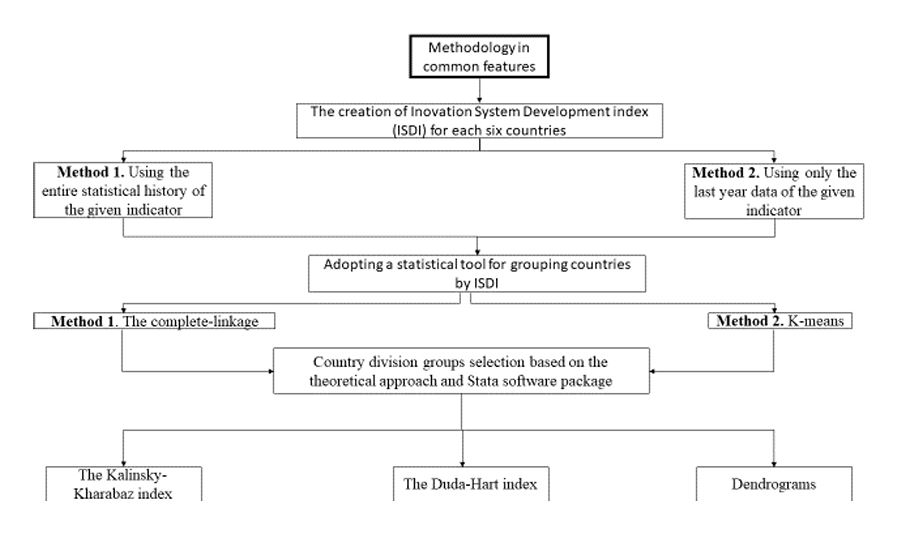
1. The creation of an Innovation System Development index for each six countries. The index consists of seven subindexes characterizing seven areas (macro environment, human capital, institutions, infrastructure, science, patent activity and innovation activity). To calculate subindexes, we used 46 indicators and a number of statistical data for each of the six countries. The statistical data included the 2007—2022 time period (see Appendix). The selection of indicators and areas was determined by the study of the experience of the evaluation of NISs in different periods. Thus, the approach adopted by us is based on both structural and functional methods, as presented by Golichenko [15].
NIS was presented through 46 indicators representing seven areas. In addition, the observation of data for about 10 years allowed us to identify most of the development trends of NISs. The data was also of two types (ordinary data and indexes). To calculate the subindexes, we have brought the statistical data of different dimensions to a normal form or one dimension. This process was different for ordinary data and indexes. In the process of index calculation, we used two methods. In the first case, the entire statistical history of the given indicator took part in the process of bringing the data to a single measurement. In the case of the second method, we used only the last year data.
After bringing the data to one dimension by two methods, we performed a calculation of subindexes, which represented the usual arithmetic mean of the normalized statistical data. The subindexes were used to perform a calculation of ISDI, which is the arithmetic mean of all the subindexes. It is worth focusing on the fact that the statistical data of the indicators used to calculate the ISDI relate to different time periods. The given situation reflects the existing objective reality.
Our approach builds on calculations from several global indices, such as the Global Innovation Index. These indices often rely on indicators derived from older statistics. We believe that including such indicators, even if they are not the most recent, is preferable to excluding them altogether. This approach ensures a more comprehensive general index, as the latest statistics may not yet be available. At the same time, there are indicators for which statistics are published with great delay. Moreover, we had two separate calculation methods. In one case, index indicators were brought to a single measurement using the most recent statistical data from each of them. In another case, the same measurability could be achieved by paying attention to the data history of the relevant indicators. As we noticed, the calculations were performed in both forms, and the corresponding results were obtained.
The advantage of our method is that a large number of indicators could be included in the calculation of the Index. In addition, a certain dynamism was given to the number, since in real life changes in indicators do not necessarily affect the relevant processes at the same time. In addition, it was possible not only to take into account the most recent data on indicators but also to define as a basis the widest possible period or history of changes in indicators.
2. Adoption of a statistical tool for grouping countries by ISDI. We used the
ISDIs obtained as a result of the application of the two methods to perform a cluster analysis. To create clusters or groups of countries, we used the complete-linkage and K-means methods of cluster analysis. We applied each of the two methods to the statistical data obtained by the first and second methods. Thus, we proposed country division groups based on the theoretical approach, the Kalinsky-Kharabaz index, the Duda-Hart index, as well as dendrograms [47]. To increase the efficiency of the cluster analysis calculations, we also used the Stata software package. As a result of the analysis, we presented the division of the country groups (Fig. 2, Fig. 3).
Results
As shown in Table 1, in the case of the first method, Estonia is the absolute leader, as the latter’s Macro Environment Index was 0.7. In Latvia and Lithuania, the subindex score is quite low. The situation is more complicated in the SC countries. In the case of the second method, the Baltic republics again were the leaders. The situation in the SC remained worrying (0.34 in Armenia, 0.23 in Azerbaijan and 0.53 in Georgia). The Baltic states have achieved quite high results in terms of human capital: the Human Capital Index of the countries was almost at the same level. In the SC, the results were above average, although the difference was significant. Scores decreased when the first method was considered. Azerbaijan was in the last place in the SC region, and Lithuania in the Baltic region. According to the second method, the Baltic countries are the leaders in terms of institutional development (INSI), followed by Georgia. Scores changed significantly when the calculations were made with the first method: Estonia (0.86) became the leading country. Georgia was the leader in the SC. In the case of the second method, Estonia (0.98) and Lithuania (0.87) were the leaders in terms of infrastructure. Azerbaijan (0.75) was the leader in the SC, which repeated the score of Latvia. Armenia was the last in terms of institutions. The picture was a little different in the case of the first method: Estonia was the absolute leader.
|
Country |
MEI |
HCI |
INSI |
INFI |
||||
|
M1 |
M2 |
M1 |
M2 |
M1 |
M2 |
M1 |
M2 |
|
|
Armenia |
0.32 |
0.34 |
0.53 |
0.56 |
0.55 |
0.74 |
0.57 |
0.67 |
|
Azerbaijan |
0.23 |
0.23 |
0.50 |
0.56 |
0.50 |
0.71 |
0.64 |
0.75 |
|
Estonia |
0.70 |
0.77 |
0.76 |
0.87 |
0.86 |
0.88 |
0.90 |
0.98 |
|
Georgia |
0.48 |
0.53 |
0.53 |
0.65 |
0.60 |
0.76 |
0.61 |
0.73 |
|
Latvia |
0.57 |
0.67 |
0.71 |
0.79 |
0.73 |
0.82 |
0.67 |
0.75 |
|
Lithuania |
0.57 |
0.76 |
0.74 |
0.81 |
0.76 |
0.81 |
0.79 |
0.87 |
|
Source: own calculations based on data from World Bank (2016—2020; 2022), International Telecommunication Union (2022), The President and Fellows of Harvard College (2022), Bertelsmann Stiftung (2022), International Energy Agency (2022), The Global Competitiveness Report (2012—2019), Transparency International (2022), Fund for Peace (2022), Property Rights Alliance (2022), Reporters Without Borders (RSF) (2022), The Heritage Foundation (2022), Sustainable Development Solutions Network (2015—2022), International Labour Organization (2021), World Intellectual Property Organization (2022), World Health Organization (2020).3 |
||||||||
Note: MEI — Macro Environment Index, HCI — Human Capital Index, INSI — Institutions Index, INFI — Infrastructure Index, M1 — first method, M2 — second method.
In the case of the second method, Estonia (0.91) was the leader in terms of the Science Index (Table 2). Scores of other countries were low. In the case of the first method, significant declines were recorded (the score was 0.74 in Estonia). Armenia (0.59) took the leading positions in the SC. In the case of both the first and second methods, the minimum scores of the Patent Activity Index were observed in Azerbaijan (0.13 and 0.19, respectively). In the case of the first method, an above-average score was observed only in Estonia (0.56). The scores of Armenia and Lithuania were the same (0.4). The application of the second method showed that Lithuania (0.73) was the leader. In the case of the second method, the Patent Activity Index was higher in Baltic countries. In the SC, Azerbaijan (0.71) was the leader, followed by Armenia (0.62) and Georgia (0.55). In case of the first method, the leaders in the regions did not change.
|
Country |
SI |
PAI |
IAI |
|||
|
M1 |
M2 |
M1 |
M2 |
M1 |
M2 |
|
|
Armenia |
0.59 |
0.62 |
0.40 |
0.63 |
0.53 |
0.62 |
|
Azerbaijan |
0.43 |
0.56 |
0.13 |
0.19 |
0.63 |
0.71 |
|
Estonia |
0.74 |
0.91 |
0.56 |
0.63 |
0.85 |
0.93 |
|
Georgia |
0.51 |
0.64 |
0.46 |
0.68 |
0.51 |
0.55 |
|
Latvia |
0.49 |
0.69 |
0.51 |
0.70 |
0.76 |
0.88 |
|
Lithuania |
0.60 |
0.76 |
0.40 |
0.73 |
0.72 |
0.76 |
Note: SI — Science Index, PAI — Patent Activity Index, IPI — Innovation Activity Index, M1 — first method, M2 — second method. Source: own calculations based on data from World Intellectual Property Organisation (2022), Scimago Lab (2022), World Bank (2022), United States Patent and Trademark Office (2020), The Global Competitiveness Report (2012—2019).4
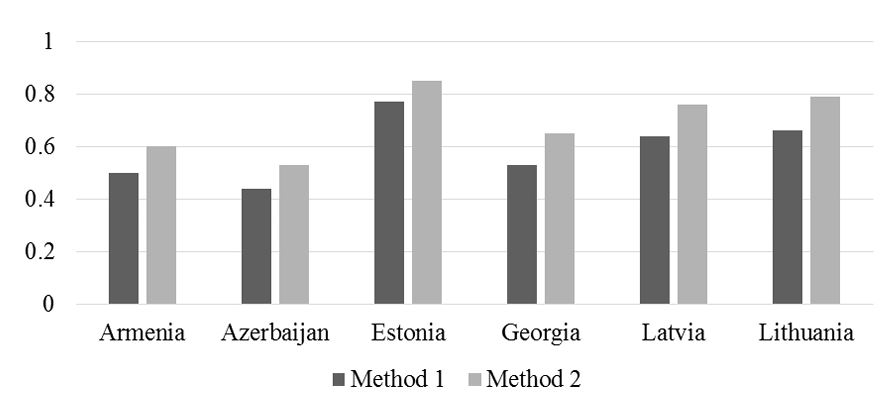
Figure 2 illustrates ISDI on the basis of two methods. In the case of the first method, Estonia (0.77) was the leader. Lithuania, Latvia, Georgia and Armenia provided higher than average levels of the ISDI, and Azerbaijan (0.44) was a country with below than average results. In the case of the second method, Estonia (0.85) was the leader, followed by Lithuania and Latvia. The SC states fall behind the Baltic countries: Georgia was the leader, followed by Armenia and Azerbaijan.
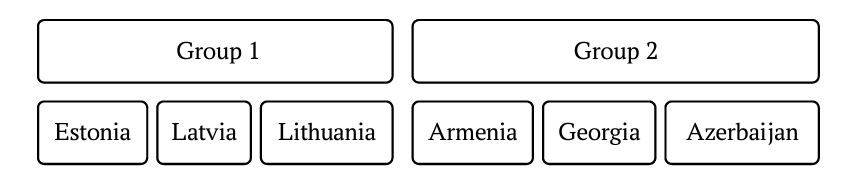
The cluster analysis performed on the basis of the data obtained with the help of the second method showed that it was optimal to classify the countries into two groups as follows (see Fig. 3).
The first group consisted of the Baltic states and the second group comprised the SC states. As shown in Figure 4, the cluster analysis carried out with the results obtained by the first method suggested a different division.
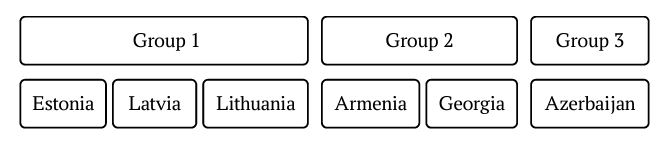
The countries were divided into three groups. Baltic countries were included in the first group. Armenia and Georgia were in the second group. Azerbaijan was in a separate country group.
Discussion
In the research, we mentioned the Soviet legacy of the Baltic and South Caucasus states. It should be noted that this circumstance, as a historical and political factor, served only as a basis for the selection of the given group of countries and the evaluation of the NISs, among other factors. In other words, the influence of the Soviet past on the NISs of the countries was not studied. Instead, we sought to illustrate how countries in transition managed their more or less comparable Soviet legacy.
Based on previous studies, Alnafrah and Mouselli reported that Latvia’s NIS was the least developed among the Baltic countries. Although significant reforms have been implemented in all three countries and a positive shift towards a knowledge-based economy has been recorded, there are certain challenges. In Estonia, there is a need for institutional and economic reforms, in Lithuania — the development of the labour market and high-tech industries, and in Latvia — the need to increase the innovation potential of SMEs. Although even these countries have national characteristics, the comparison of their NISs is appropriate [39].
There is a significant body of literature on the evaluation of the Baltic states’ NISs. Based on data from the Baltic states, Alnafrah and Museli tried to identify the factors of the NIS that contribute to the expansion of entrepreneurial activity: as a result, infrastructural and economic factors were separated from the four factors forming the triple helix model [40].
Reforms of the Estonian NIS started in the late 1990s. In 1998, the Estonian Innovation Program was launched, followed by the National Development Program in 2000—2002. The “Knowledge-based Estonia” initiative was launched for 2014—2020, the main target of which was to improve productivity and the education system. Another project, the Entrepreneurship Growth Strategy, was aimed at promoting innovation and highly productive activities through specialization. The Estonian Development Fund aims to promote start-up activity [26]. However, despite significant efforts, the level of scientific-educational and sectoral cooperation remains low. In addition, R&D expenditure is not directed to high-tech industries and is mostly allocated to a small number of organisations [39].
From the Soviet era to the EU membership and beyond, Latvia’s economic structure has undergone tectonic shifts. However, only a small proportion of organisations belong to the high-tech industry. Besides, most of the up-to-date technology is imported [39]. “Latvia is considered the most vulnerable economy among the European Union economies in terms of the intensity of innovative companies” [39, p. 89—92]. As in Estonia, the links between research and the private sector are weak in Latvia. The pace of reforms in the education system is slow. To solve the mentioned problems, since 2007, a law has been in force in Latvia aimed at financing educational and research institutions [39].
The structural transformation of the Lithuanian economy took place at a faster pace. R&D expenditure continued to increase. It should be noted that the majority of innovation expenditure is allocated to the acquisition of equipment and technology imported from abroad. Back in 2009, reforms were implemented in the higher education system aimed at increasing the autonomy of educational institutions. Various policies and strategies aimed at improving innovation activity have been implemented in the country over the years (e. g., The Lithuanian Innovation Strategy for 2010—2020, Valley Program, Lithuania 2030) [39].
In the case of the SC countries, the problems of modernising innovation systems and increasing their competitiveness are more complicated. First of all, it refers to the underdevelopment of the innovation infrastructures of the regional countries. This is primarily due to the inefficiency and incompleteness of the institutional and structural reforms implemented in the SC countries in the 1990s, which led to the disintegration of the high-tech industry potential, the degradation of human capital, science, and educational systems, and “brain drain”. Our analysis confirmed that circumstance from the point of view that indicators of the development of the macro environment and human capital in SC countries are significantly inferior to the indicators characterizing the quality of the macro environment and human capital of the Baltic countries. Similar conclusions were obtained from the analysis of subindexes related to the quality of institutions regulating NISs and infrastructure development. The gap between the SC and the Baltic countries in terms of the integral indicators of the development of innovation policies and NISs is at a slightly lower level.
The United Nations Economic Commission for Europe [UNECE] presented the latest trends of NISs of the SC states as follows: Armenia tries to strengthen research-industry links, Azerbaijan emphasizes the diversification of the economy and Georgia tries to use its innovation potential as much as possible.5
Poghosyan emphasized the positive aspects of the Soviet legacy for Armenian NIS, such as the developed natural science research base, the presence of highly qualified specialists and the Armenian diaspora. Armenia was one of the technological hubs of the USSR. For that reason, a number of challenges arose in the post-Soviet period, as “...Armenia lost most of its R&D and production resources precisely because it was very diversified for its small size” [38, p. 57]. The active public policy to support innovation began only at the beginning of the 21st century albeit with rather modest financial flows. However, a number of legislative regulations aimed at the formation of the NIS took place. Legislative reforms were aimed mainly at the promotion of high-tech exports and the development of knowledge-intensive industries, but research-industry links remained weak. For Armenia, as a country with such innovation potential, it is especially important to ensure strong links. Although various innovation platforms, free economic zones and science and technology parks have been established, the latter have not significantly improved the efficiency of the NIS. During the period of privatization, the role of foreign investment was not significant [38]. Although, in the 2010s, FDI in the high-tech sector, especially in the telecommunications sector, had a positive effect on the telecommunications revenue, as in Latvia and Lithuania [49]. Poghosyan noted: “However, the potential for FDI’s contribution in Armenian IS is very small” [38, p. 65]. The author continued: “Overall, the efforts to build an efficient and knowledge-driven market economy in Armenia are still in their infancy” [38, p. 65]. In particular, Armenia’s Digital Agenda 2030 is related to the issues of advanced electronic document management systems, security and digital workforce formation.6
The Georgia National Innovation Ecosystem (GENIE) project was launched in Georgia with international support, aimed at improving infrastructure and promoting innovation activity. Some successes in the development of the NIS have been recorded (favourable business and institutional environment, FDI attraction). Challenges are related to commercialization of innovation, strength of R&D network links, promotion of private sector investments, quality of education system, improvement of professional skills, promotion of innovation.7 The research and innovation output is quite modest. Limitations of innovation potential are related to sectoral funding, bureaucracy, and lack of up-to-date technologies. The problems of Georgian NIS can be solved in three directions (financing, research activity, and NIS management).8
Despite the built science and technology parks, Azerbaijan’s economy relies on the oil and gas industry and needs diversification. The improvement of the innovative environment in Azerbaijan should first of all be implemented by increasing the volume of financing, especially for SMEs. In addition, it is necessary to improve human capital, educational institutions-private sector links, as well as digitize the economy. In 2019, an innovation agency was launched in Azerbaijan to promote the commercialization of novelty and innovation activity. In addition, the Department of Innovative Development and E-government supports innovation in both the public and private sectors. However, there is a need to redistribute the roles and functions of state institutions. The Innovation Ecosystem Map of Azerbaijan presents the projects and spheres of legislative regulation for effective innovation ecosystem formation.9
Our research proves that the NIS of any country is the totality of all relations and results of its previous historical, economic, technological and social development. A review of the literature, the Baltic states’ policy of NIS restructurization since independence, and the results obtained in our research support this statement. The analysis of the NISs of the groups of post-Soviet countries with basically similar and comparable starting conditions (Baltic countries and SC countries) is of great interest.
Conclusions
The analysis and discussion in the article show that the processes of formation and transformation of the NISs of the clusters of the SC and Baltic countries, which are part of the community post-Soviet countries, testify to the existence of many problems related to the inefficiency of the existing institutional, infrastructural, and innovation policies. In particular, the problems refer to the weak links and low level of emergence of the components of the NISs.
The indexes calculated in the research indicate the fundamental differences in the development of the NISs of the SC and Baltic countries. The Baltic States were leaders in terms of ISDI. Estonia was an absolute leader in terms of all subindexes (except PAI). The biggest differences between the two regions were related to MEI. Armenia and Georgia were relatively close to the Baltic countries in terms of PAI. Azerbaijan surpassed Armenia and Georgia only in terms of INFI and IAI. If the NISs of the Baltic countries, are integrated into the economic area of the European Union and are essentially more oriented towards the classic schemes and mechanisms of innovation and technology creation, then the innovation systems of the SC countries are more oriented towards the mechanisms of technology import and technology imitation.
The analysis of the indicators and the literature on the transformation policy of the NISs of the Baltic countries shows that since the collapse of the Soviet Union and the achievement of independence, significant progress has been made in the innovation and technological potential. Basically, it is due to the effective institutional and structural reforms implemented in the Baltic countries, which moved along the path of NIS structural changes. The privatisation of state property and the formation of market infrastructure made it possible to form a stable macroeconomic environment in the Baltic countries in the late 1990s, which created important incentives for the development of scientific, innovation, and technological potential in these countries. The early membership in the European Union allowed the Baltic countries to integrate into the innovation networks and value chains of the developed European countries.
Nevertheless, our observations show that the existence of not-so-efficient and weak links of subsystems of NISs (science, educational-university institutions, state structures, business and corporate structures, financial systems, etc.) are still serious problems for the Baltic countries. Nevertheless, the NISs of the Baltic countries are developing in the context of the strategic approaches of the European countries, which allows them to continuously strengthen and develop both the innovation infrastructure and the innovation policy tools. Such development trends are also conditioned by the opportunities to integrate into common European innovation programs and to use centralised financing funds.
In general, we solved the problem set in the research. Taking into account the studied literature, the results of previous works, ensuring comparability was an important issue, which predetermined the selection of countries. However, it should be noted that this research can be considered a starting point in some sense. Apart from estimation and cluster analysis of NISs, the study and comparisons of separate system elements are also of great interest.
The work was supported by the Science Committee of RA, in the framework of the research project № 21T-5B313.
Appendix
List of the used indicators
Macro Environment
1. GDP per capita, PPP (current international $), 2010—2020
2. Foreign direct investment, net inflows (% of GDP), 2010—2020
3. Manufactures imports (% of merchandise imports), 2010—2021
4. Trade (% of GDP), 2010—2020
5. Conflict intensity, score, 2022, 2010, 2012, 2014, 2016, 2018, 2020, 2022
6. Economic Complexity Index, score, 2010—2019
Infrastructure
7. Individuals using the Internet (% of population), 2010—2020
8. Mobile cellular subscriptions (per 100 people), 2010—2020
9.Electricity consumption per capita, MWh/capita, 2020, 2010—2020
10. Quality of Road Infrastructure 1—7 (best), 2019, 2013—2019
Institutions
11. Corruption perception index (score 0—100), 2012—2021
12. Human rights and rule of law (0 high- 10 low), 2010—2021
13. Property rights protection (score), 2016—2021
14. Ease of access to loans (score), 2016—2021
15. Protection of intellectual property rights (score), 2016—2021
16. Perception of IP protection (score), 2016—2021
17. Copyright protection (score), 2016—2021
18. Index of economic freedom (score), 2010—2022
19. World Press Freedom Index (0—100 score), 2013—2022
20. Freedom of expression, score (1—10), 2010, 2012, 2014, 2016, 2018, 2020, 2022
21. Ranking of happiness, score, 2015—2022
22. Ease of doing business score (DB17-20 methodology) 2016—2020
Science
23. Scientific and technical articles, per bln GDP PPP 2013—2021
24. Citable documents per 1 mln population, 2010—2021
25. Citations per document, number, 2010—2021
26. Citable documents H index 2013—2021
27. International collaboration, % 2010—2021
28. Open access, % 2010—2021
29. University industry research collaboration, score 2013—2021
30. Self-sites share, % 2010—2021
Patent Activity
31. Number of patent grants by WIPO per 1 mln population, 2010—2020
32. Number of patent applications by WIPO per 1 mln population, 2010—2020
33. Total trademark applications (direct and via the Madrid system) per 1 mln population, 2010—2020
34. Number or patent grants by USPTO, 2011—2020
Innovation Activity
35. Medium and high-tech manufacturing value added (% manufacturing value added), 2009—2019
36. High-technology exports (% of manufactured exports), 2010—2020
37. Knowledge intensive employment, 2015—2021
38. Buyer sophistication, 1–7 (best) (innovation capability commercialization), 2014—2019
39. Venture capial availability, 1–7 (best) 2014—2019
40. State of cluster development, 1–7 (best), 2014—2019
Human Capital
41. Life expectancy at brith, years, 2007—2019
42. Expenditure on education, % of GDP, 2007—2018
43. School enrollment, tertiary (% gross), 2007—2019
44. Output per worker (GDP constant 2010 US $), 2010—2021
45. Graduates in science and engineering, %, 2013—2021
46. Human flight and brain drain, (0 low- 10 high), 2010—2021
Reference
https://doi.org/10.1016/0160-791X(93)90003-7
https://doi.org/10.1080/1366271032000163649