Anthropogenic and natural factors shaping the boundaries of the St. Petersburg suburban area


Abstract
The suburban area of St. Petersburg stands out as Russia’s most complex in terms of spatial structure, encompassing districts ranging from the suburban imperial residences of the 18th century to low-rise residential zones and modern multi-storey developments of the 21st century. This study concluded that extensive stretches of the administrative border between St. Petersburg and the Leningrad region divide homogeneous territories. Therefore, it makes little academic or practical sense to confine scholarly efforts solely to suburbs situated on one side of this border. The principal factor in delineating the St. Petersburg urban area is the transport accessibility of territories surrounding the city. It was empirically determined that the inner boundary of the suburban area is located approximately within the 40—45-minute isochrone from the city centre, while the outer boundary extends to the 2-hour isochrone. In the conditions of today’s St. Petersburg, a two-hour isochrone corresponds to a 60 km distance. Along with isochrones, the actual boundary of the suburban area is determined by several natural and anthropogenic factors.
In terms of the natural environment, a significant part of the St. Petersburg suburban area is anthropogenic forest-steppe, whose landscapes are radically different from those of the area’s natural southern taiga subzone. The features of the ‘forest steppe’ reach their peak to the southwest and south of St. Petersburg. To the north of the city, the suburban zone is defined by both ‘anthropogenic forest-steppe’ and secondary small-leaved forests that have replaced agricultural lands. Another prominent feature is parks found on the premises of former estates where introduced woody species account for a substantial portion of vegetation. The spatial structure of the suburban area north of St. Petersburg is complicated by large extents of unpopulated areas. Since the 19th century, they have divided the area into two virtually disconnected parts.
Introduction
Relevance. Russia has undergone rapid suburbanisation in recent decades, with suburban areas developing around all cities of the country. These zones are as diverse as cities themselves. The suburbs of Moscow and St. Petersburg began to emerge in the second half of the 19th century and have undergone numerous changes over the centuries, including significant spatial transformations.
The suburban area of St. Petersburg is the most complex in terms of its spatial structure not only in Russia but also across the former Soviet Union. The ‘museum suburbs’ (formerly towns of the Palace Administration) coexist with various historical and residential developments. These include former imperial dacha settlements, factory villages from the interwar period, military towns that played crucial roles during the Great Patriotic War and remained largely intact until the early 21st century, and detached housing areas from the 1950s. Additionally, there are settlements from the 1960s and 1970s dominated by Khrushchev-era apartment buildings, 1980s settlements featuring Brezhnev-era buildings, and entirely new suburban settlements that sprang up during the post-Soviet period. Over more than a century, the functions of the suburban zone’s various segments have evolved, and these changes continue to this day. These circumstances make the suburban zone of St. Petersburg and its spatial development a highly fascinating subject for research. However, despite its intrigue, it remains poorly studied from a geographical perspective.
The study aims to delineate the suburban area of St. Petersburg and describe the conditions and factors contributing to its emergence. Anthropogenic factors in this process include the transport system and settlement patterns in areas adjacent to St. Petersburg. Natural factors encompass landscapes that either hinder or promote the formation of suburbs. In this context, anthropogenic landscapes also warrant consideration.
Literature review
The US stands out as the undisputed leader and pioneer in suburban studies, a distinction owing to its status as a ‘nation of suburbs’. In 1950, 27 % of the US population lived in the suburbs, and by 2002, this figure had risen to 52 % [1]. Not only are these areas home to a substantial part of the populace, but they also offer ample job opportunities.1
In the mid-1980s, Kenneth T. Jackson [2] carried out a historical study of suburbanisation in the US, investigating a period from the mid-19th century to the 1980s. His monograph, whose findings remain relevant to this day, is entitled Crabgrass Frontier: The Suburbanization of the United States with a reference to both the American frontier and the lawn-ruining weed that was a symbol of suburban life from 1945 to the early 1970s.2 Jackson views suburbs as a ‘new frontier’, the ‘American dream’ come true in the form of a house and a lawn. The Australian researcher Lionel Frost [4] echoes this viewpoint, as seen in his book New Urban Frontier: Urbanisation and City Building in Australasia and the American West, where he presents the findings of his exploration of suburbs in the Pacific coast states. According to Frost, the emergence of the ‘new urban frontier’ at the turn of the 19th and 20th centuries marked the beginning of American-style suburbanisation, which continues to this day.
Nowhere else in the world are suburban area structures as complex as in the US. American scientists have developed a detailed classification of these zones, introducing concepts such as ‘boomburb’, ‘edge city’, ‘greenfields’, and ‘uptown’. A boomburb is a swiftly developing part of the suburban zone; an edge city, located in the outer peripheral part of the suburban zone, serves as an alternative urban centre; greenfields are new suburban settlements created from scratch; an uptown is a pun used to refer to the opposite of ‘downtown’. Unlike greenfields, uptowns are ‘old’ settlements that fit in seamlessly in the new suburban settlement system [5].
Yet suburbs were not an exclusively US phenomenon: during the second half of the 20th century, Western and Eastern Europe, as well as the Soviet Union, experienced suburbanisation. Suburbanisation in Europe and the USSR was comprehensively described by academics from across the region. In Western Europe, the term ‘peri-urbanisation’, originating in France in 1976, gained widespread usage. Various publications define it as in-migration from large cities to small towns and rural areas, the latter gradually acquiring urban features (see [7], [8], [9]). Therefore, some of its instances can be termed ‘ruralisation’, which is characteristic of many European countries (see [10], [11]). However, the relationship between ruralisation and peri-urbanisation in Europe, considering the relatively short domestic distances, sometimes remains unclear.
In Asia, suburbanisation follows a trajectory distinctly different from that of the US and Western Europe. In the 1980s, the Canadian-based New Zealand geographer Terry McGee proposed the term ‘desakota’ (‘city-village’ in the Indonesian language) to refer to Eastern Asian suburbanisation [12]. Although not very common, it sometimes appears in the Russian literature [13]. Later, McGee developed a classification of desakotas [14].
There are at least three types of urbanisation:
1. Suburbanisation per se, or American suburbanisation, involves the ‘outward’ expansion of cities, driven by the availability of sparsely inhabited areas. Such suburban areas are primarily formed through the establishment of new urban settlements, characterized in the case of the US by low-rise residential areas and predominantly multi-story office, commercial, and industrial developments. Suburbs may also incorporate pre-existing urban and rural settlements, whose functions change dramatically in the process.
2. Peri-urbanisation, or European suburbanisation, is migration from large cities to small towns and rural settlements, resulting in significant changes to the built environment. The space between the cities and nascent suburbs may see further development in the future, or it may remain intact. Peri-urbanisation is a response to limited space conditions, leading to the emergence of low-rise (less often) and multi-story (more frequently) development areas. In other words, while American suburbanisation involves creating new settlements and gradually integrating existing ones, European suburbanisation entails migration from cities to already established settlements, leading to radical transformations, and the subsequent development of the space between them.
3. Desakota, or Asian suburbanisation, involves the formation of extensive rural areas in the vicinity of large cities, these areas having very few urban features if any at all. Economically, desakota residents can be engaged in activities typical of both urban and rural zones. Like in the US, low-rise buildings are typical in desakota areas; however, they signify poverty rather than affluence.
Although other types of suburbanization may exist, a typology of this process lies beyond the scope of this study. The three types listed above are of interest to our research as all of them are observed in Russia today.
Predominant types of suburbanisation vary across the country as the process may occur according to the American (suburbanisation), European (peri-urbanisation) or Asian (desakota) model or a combination of these. Since the demise of the USSR, Buryatia has seen rapid urbanisation. The capital of the republic, Ulan-Ude, is surrounded by predominantly rural-type development areas, which attract people from across the region [15]. For example, Anatoly Breslavsky notes that rural migrants predominated among the new residents who settled in the suburban areas of Ulan-Ude between the 1990s and 2010s, accounting for 92.3 % in 2014. These migrants typically had average to below-average incomes [16, p. 98]. Therefore, one can conclude that suburbanisation in Ulan-Ude follows the Asian desakota model, with suburban zones maintaining a rural character in both settlement patterns and residents’ occupations. Similar processes take place in Yakutia [17]. A blend of all three suburbanisation types is characteristic of large cities in European Russia [18], [19].
Yet some researchers argue that, in the case of Russia, the emergence of so-called dacha territories is tantamount to suburbanisation (see [20]). It is important to distinguish between two separate phenomena. The first is ‘dacha settlements’ proper, built from the late 19th century [21] to the 1950s—1960s, which have permanent residents. The second involves areas managed by ‘gardening non-profit associations’. Federal Law № 217-FZ of July 29, 2017 ‘On Horticulture and Gardening by Citizens for Personal Needs and on Amending Certain Legislative Acts of the Russian Federation’,3 does not consider lands of such associations as settlements. Suburbanisation, however, entails the formation of a system of settlements, which dachas are not unequivocally classified as, even if they have a year-round population.
The development of the suburban area of St. Petersburg primarily followed the European suburbanisation (or peri-urbanisation) model, building on an established network of settlements. Yet a desakota admixture was also evident. Since the beginning of the 21st century, American-style suburbanisation has become dominant, with rapid property development occurring in the in-between areas, integrating them with pre-existing settlements. In addition, there are myriads of non-commercial gardening associations within urban areas. Created in the 1950s and 1960s, they are now surrounded by urban housing. A prime example is the grounds of the Kirov Plant Gardening Association, located between Prospekt Veteranov and Prospekt Narodnogo Opolcheniya in the city’s south-west.4 As a result, identifying the current boundaries of the suburban area of St. Petersburg is often an intricate task.
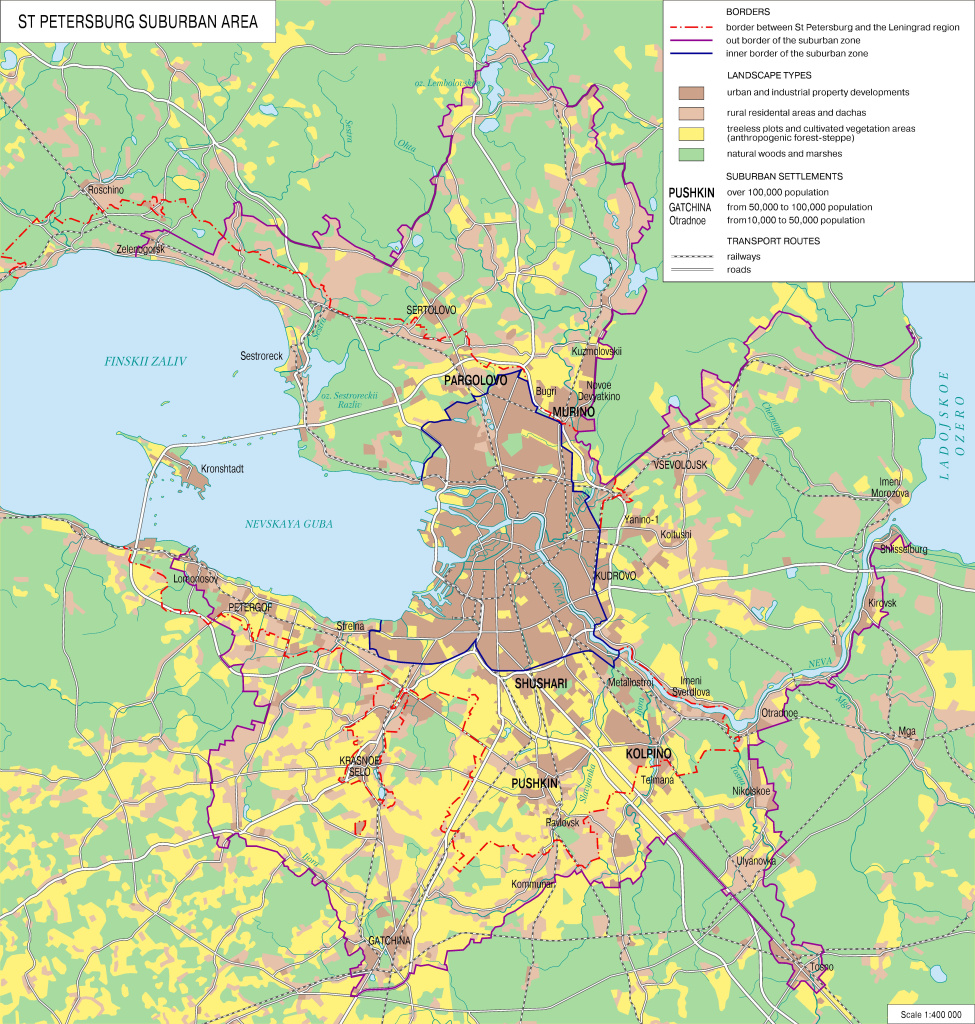
Materials and methods. The main method used in this study was fieldwork. The first stage of the research involved determining the actual administrative border between St. Petersburg and the Leningrad region. Forty-six reference points were selected along the northern, eastern, and southern directions of the administrative border, pinpointing areas where the most significant disparities between the de jure and de factor boundaries were observed (Fig. 1).
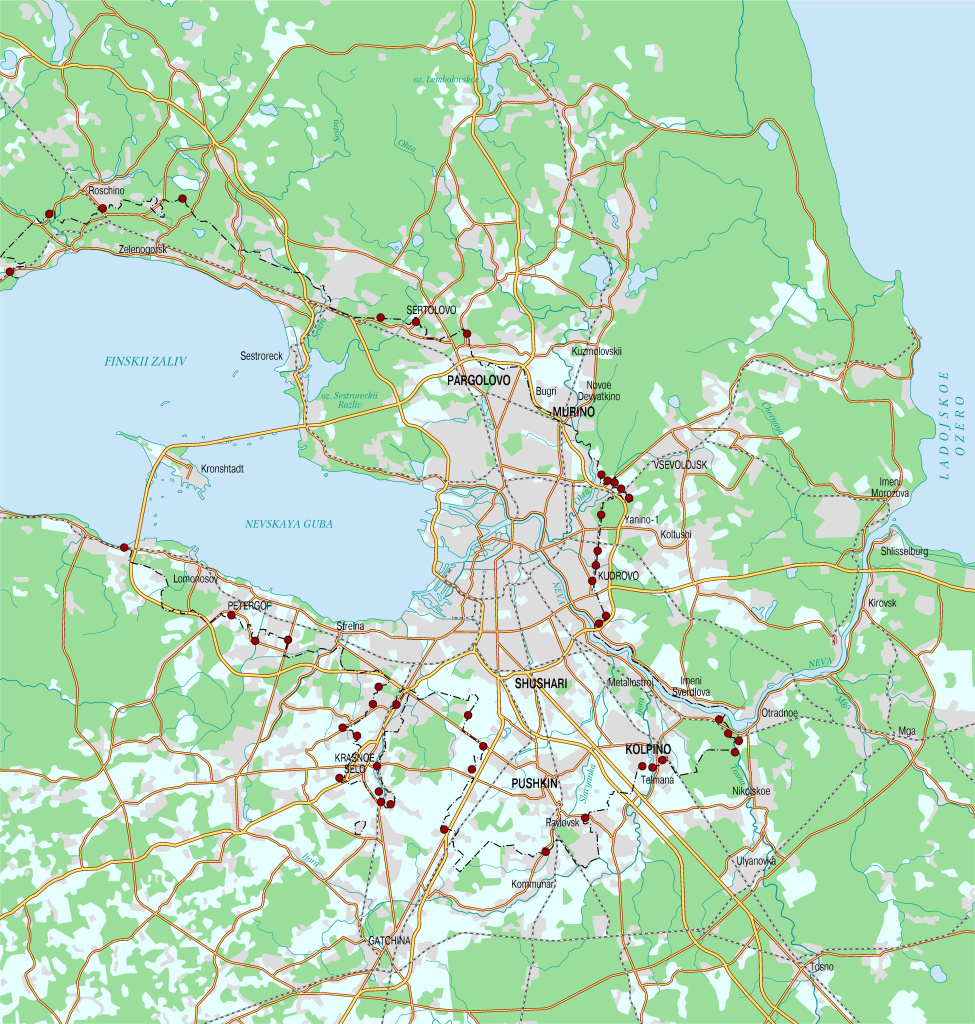
A visual assessment revealed numerous discrepancies between the borders of the city and the region as depicted on various mapping platforms (Yandex Maps, Google Maps).
Key results. The suburban area of St. Petersburg encompasses two main types of territories. Firstly, it includes territories on either side of the boundary between the city and the Leningrad region where this border aligns with the former border between the region’s territories under the authority of the Leningrad City Council of People’s Deputies (from 1991 to 1995, the Administration of St. Petersburg) and the remaining region. Secondly, it comprises the territory extending only towards the region, where the region borders the ‘city of republican subordination’ of Leningrad (since 1991, St. Petersburg). This understanding of the ‘suburban zone’ contradicts the widely spread but entirely incorrect notion of it as a territory directly adjacent to the administrative border between St. Petersburg and the Leningrad Region but located entirely outside the city [22].
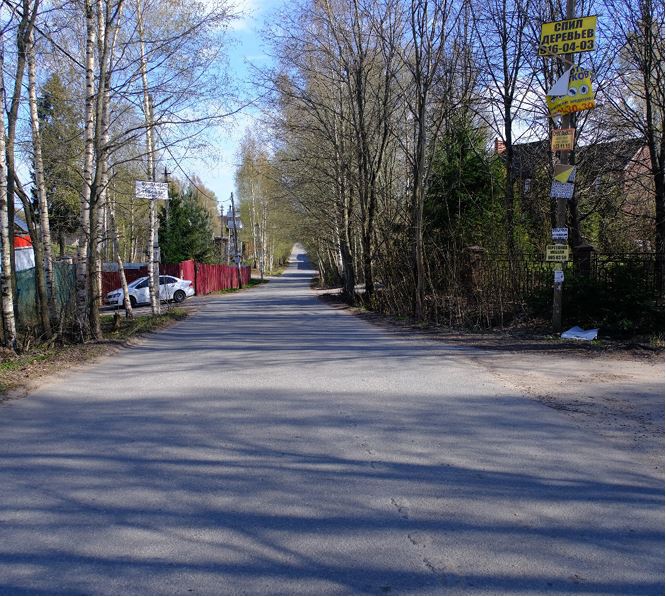
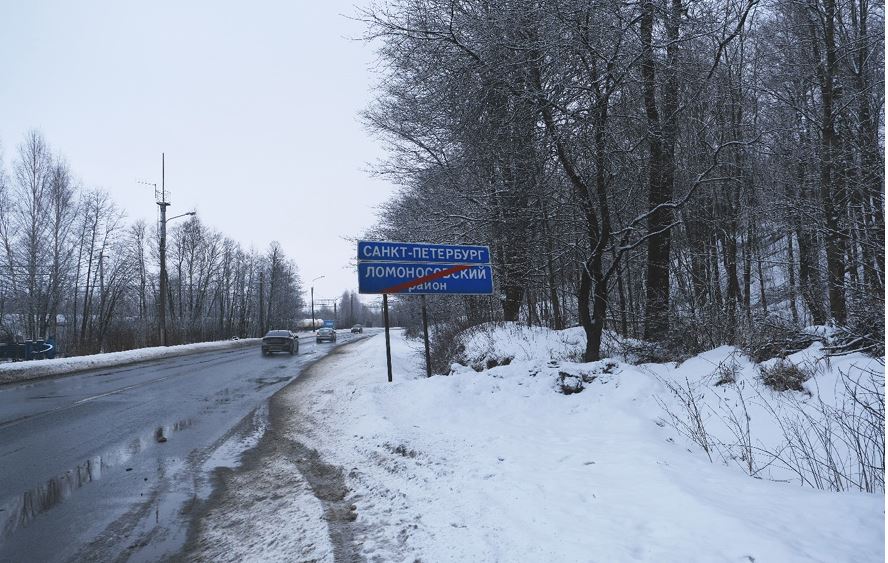
The administrative border between St. Petersburg and the Leningrad region formed over several decades, from 1931 to 1976. It has a very intricate nature, sometimes splitting settlements where one part belongs to St. Petersburg and the other to the Leningrad region. Sometimes parts of these divided settlements even have different names (Fig. 2).
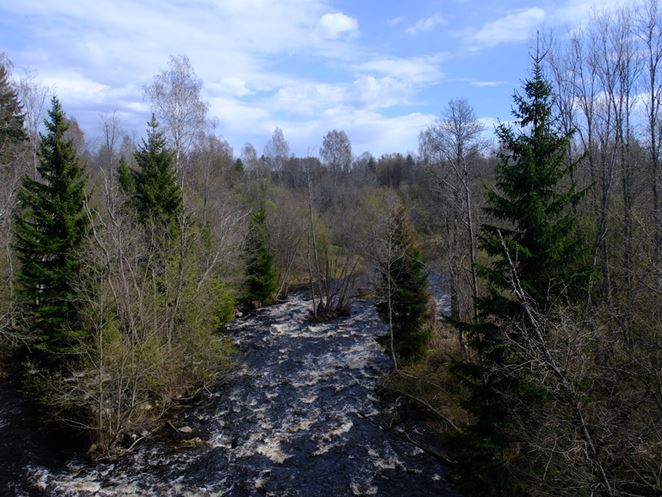
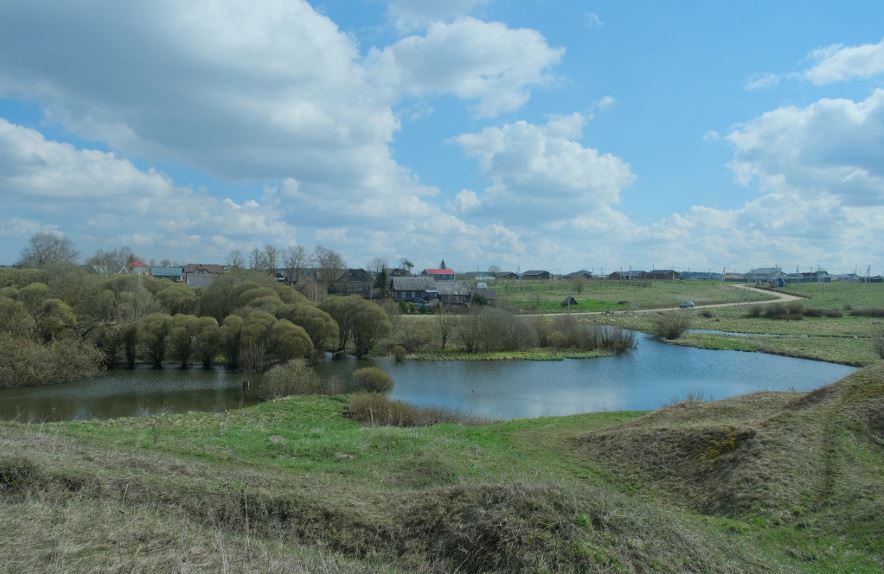
In some cases, vice versa, the administrative border between St. Petersburg and the Leningrad region divides completely unpopulated territories. This is the case, for example, along most of the border between the city’s Kurortny district and the Vyborg district of the Leningrad region (Fig. 3).
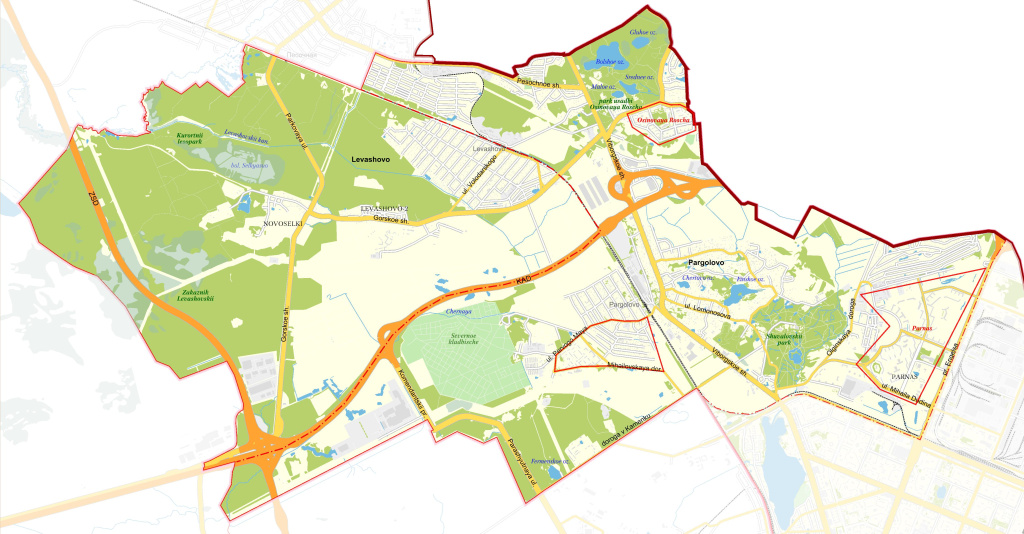
Moreover, areas that differ strikingly in terms of property development may co-exist within suburban municipalities, ranging from unpopulated, waterlogged or forested areas to state-of-the-art residential and industrial districts. A prime example is two neighbouring municipalities within the city’s Vyborg district, which adjoin the border with the Leningrad region: the villages of Pargolovo and Levashovo. The population of the Pargolovo municipality has increased approximately 6.5-fold over the 21st century, from 16,000 people in 2012 to 106,155 people in 2023 and continues to grow. The spatial structure of this municipality is quite unique. Its central part, occupying most of the village’s area, is dominated by individual housing built from the 1930s to 1960s with an addition of post-Soviet cottages. To the south and north of the centre, there are areas of 21st-century high-rise property development located at considerable distances from each other. These are the buildings that appeared near the Parnas metro station, replacing abandoned lots and demolished garages, as well as the new districts of the village of Osinovaya Roshcha and the new development areas in Mikhaylovka, formerly agricultural lands (Fig. 4).
|
| 4 |
| The Pargolovo and Levashovo municipalities of St. Petersburg’s Vyborg district and their high-rise property development areas. |
|
Prepared by Tatiana Andreeva (2023) |
The population of the municipality of Levashovo was approximately 3.7 thousand people in 2012 and about 6 thousand people in 2023, nearly doubling over the period. The substantial disparities in population growth rates are largely due to natural conditions. The village of Levashovo has little room for multi-storey development as half of its territory is occupied by forests and marshlands, some of which constitute the Levashovo Memorial Cemetery — a former NKVD execution site where tens of thousands of victims of Stalinist repressions were buried in the 1930s. The non-forested and undeveloped part of Levashovo, located to the north of the ring road and clearly visible on the map above, is the construction site of the new Levashovo airport.
Thus, establishing the boundaries of the suburban zone of St. Petersburg is a complex task. The boundaries between the suburban zone of Leningrad and St. Petersburg were never formally established, unlike in Moscow. For Russia’s capital and the adjacent region, the 1980 boundaries were described as follows: ‘The suburban zone is the territory of the Moscow region within the Moscow agglomeration, within a radius of 60—70 km from the borders of the city…’.5 Yet, although both outer and interior borders require delineation, only the external one was defined.
The current plan of St. Petersburg sets the administrative border as the foundation for the city’s interaction with the region. It designates a ‘zone of influence between St. Petersburg and the Leningrad region’, extending 5 km from the city’s border towards the region. However, the map presented in this plan draws the boundary of the ‘influence zone’ at varying distances from the administrative border, sometimes — as in the case of the north of the Vyborg district — cutting through the territory of St. Petersburg.6 The plan does not specifically address the suburban area but rather mentions the St. Petersburg agglomeration, with various definitions provided for its boundaries within the document. Denis Olifir defines the St. Petersburg agglomeration as encompassing the territory of the Leningrad region from the state border to the eastern boundaries of the Volkhov and Kirishi districts, excluding the Slantsy and Luga municipalities, with a total area of approximately 39,000 km2. According to Leonid Losin and Viktor Solodilov, the agglomeration is much smaller, covering an area of 11,600 km2, with St. Petersburg occupying about 1,400 km2 of that total [23]. The agglomeration sketch map they developed in 2019 was republished in 2022 with no significant alterations, and the accompanying text remained largely unchanged as well [25].
The boundaries of the agglomeration proposed by Losin and Solodilov was used by Elena Lapshina in her delimitation of the area. She writes that ‘the suburban area of St. Petersburg includes territories of the Leningrad region bordering the city (the Vsevolozhsk, Vyborg, Kirovsk, Tosno, Gatchina and Lomonosov municipalities), the Priozersky district as well as some districts of St. Petersburg dominated by individual housing development (the Kurortny, Pushkin, Peterhof, Primorsky, Vyborg and Kolpino districts)’ [26, p. 99]. Without delving into the specifics of the agglomeration boundaries, it is worth noting that automatically extending them to the suburban area is hardly justified. Such a definition would expand the suburban area to encompass the entire Karelian Isthmus, from Lake Ladoga to the Finnish border. This would mean its outer northwestern boundary is roughly 150 km from St. Petersburg, while the southeastern border aligns with the boundary between the Leningrad and Novgorod regions, approximately 120 km from the city. The St. Petersburg suburbs cannot extend to such remote areas, as the socio-economic viability of the territory and population diminishes as the distance from the agglomeration centre increases, leading to a reduction in its area. As Pavel Druzhinin notes, ‘creating a comfortable environment in an agglomeration requires significant resources, and the larger the agglomeration, the larger their share should be. Since the territory of an agglomeration grows faster than its population, sectors of the economy servicing the agglomeration grow more rapidly than innovative industries, and labour productivity in the agglomerations increases slowly’ [27, p. 154]. Put simply, the farther a settlement is from the main city within an agglomeration, the more energy it needs to maintain communication with the centre and the less it invests in its own development. This statement seems to apply to the processes of both agglomeration and suburbanisation.
Ilya Reznikov while not addressing the suburban area per se, considers nevertheless the boundaries of the so-called ‘first belt of the St. Petersburg agglomeration’, which can be identified with the suburban area. Reznikov includes in this belt territories limited by the village of Privetninsky on the northern coast of the Gulf of Finland, the town of Sosnovy Bor on its southern coast, the Siverskaya station of the Oktyabrskaya Railway, the Vyritsa station of the Vitebsk stretch of the railway, the Fornosovo station of the St. Petersburg—Novgorod stretches, the Ushaki station of the Moscow stretch, the village of Priladozhsky on the shore of Lake Ladoga and the village of Lembolovo north of the city [28].
As previously empirically established [19], the boundary between the city proper and the suburban area is defined by the 45—50-minute transport isochrone. As of 2024, this corresponds to a distance of approximately 20—22 km from the center of St. Petersburg, assumed to be located at Kazan Square or Nevsky Prospect near the Kazan Cathedral. The 40-minute isochrone has served as the interior boundary of the suburban area throughout the entire 20th century and into the present years of the 21st century. The distance it defines changes, however, as transport develops and its speeds grow.
The outer boundary of the suburban area is roughly determined by the two-hour transport isochrone, which corresponds to a distance of 50—60 km in the St. Petersburg suburban area. Thus, the outer boundary of the area is located now at approximately the same distance from the city centre as the outer boundary of the Moscow suburban area was forty years ago. This correspondence can be logically explained by St. Petersburg’s overall lag behind Moscow in urban planning terms.
As the 40—45-minute isochrone has persisted as the interior boundary for more than a century from the turn of the 19th and 20th centuries, the two-hour isochrone has served as the outer boundary for the same length of time. Yet, the distance that can be covered in two hours changes with the development of transport, and accordingly, both the inner and outer boundaries of the suburban zone alter.
It is noteworthy that the part of the de jure territory of St. Petersburg lying outside the two-hour isochrone is de facto located outside the outer boundary of the suburban zone. Indeed, along the southern coast of the Gulf of Finland, the suburban area stretches only as far as the Oranienbaum-1 (Lomonosov) station, and along the northern coast, it extends no farther than the Zelenogorsk station.
The actual outer boundary of the suburban area follows a significantly more complex path than the two-hour isochrone due to the transport and natural features of the territory. The border runs closest to the isochrone in the south-west, between Lomonosov and Gatchina. A characteristic feature of this boundary is that it has a well-defined natural component: the inhabited territory there is non-forested, falling under the definition of ‘anthropogenic forest-steppe’. The forest vegetation is predominantly of secondary growth, while the ‘forest-steppe’ itself is of exclusively anthropogenic origin: without human interference, the area would be overgrown with southern taiga vegetation. Due to the nature of the relief and soil, pine forests are expected to dominate on the uplands, while spruce forests would be more prevalent in the depressions.
To the north and east of the city, the ‘anthropogenic forest-steppe’ does not constitute a continuous feature due to the more complex terrain compared to the southern part, which is dominated by a continuous homogeneous plain and broken ground. However, ‘anthropogenic forest-steppe’ is also present in areas that have favourable conditions for property development, acting as a reliable marker of a territory’s reclamation status and whether it can be identified with the suburban zone (Fig. 6).
The dry, well-drained territories south of the Gulf of Finland have long been an attractive place to settle. Before the Great Patriotic War, when the local rural population consisted mainly of Ingrian Finns (as evidenced by remaining toponyms, church buildings and cemeteries), there were many more rural settlements in this area than there are today, and the rural population density was higher. It was probably then that the ‘anthropogenic forest-steppes’ began to emerge. In any case, they can already be visible on the maps of the late 19th century.
This area boasts very favourable natural conditions, which is apparent from the fact that all of the preserved imperial country estates are located within its boundaries: Peterhof, Gatchina, and Tsarskoe Selo (known today as Pushkin). Although some researchers define Peterhof as a recreational town [22], such classification is entirely incorrect. The town has no recreational function today, being a prominent tourist attraction. At the same time, its main purpose today is industrial. Until the beginning of the 21st century, the town’s principal enterprise was the Petrodvorets watch factory [28]. However, at the turn of the century, the formation of a large industrial zone began, involving the neighbouring parts of Peterhof and Strelna [29].
This is a densely populated area, almost completely bereft of forests or marshes, where something resembling natural vegetation can only be seen in the parks: the celebrated Lower Park is dominated by dark coniferous species typical of southern taiga wetlands. North of Gatchina, the suburban area boundary extends in the northeastern direction towards Pavlovsk, running along the left bank of the Izhora.
As one moves away from Izhora, the area becomes increasingly swampy, naturally resulting in a sparser population. From the Izhora Valley, the border of the suburban zone extends into the Tosna River basin. Following the river, it ascends to the town of Tosno, then, tracing the river’s path once more, it heads northward to the right bank of the Neva River (the town of Otradnoye). Continuing in a narrow strip along the Schlisselburg road, it extends to the town of Schlisselburg, situated at the source of the Neva River on the shore of Lake Ladoga. Between the watershed of the Izhora and Tosna rivers and the shore of Lake Ladoga, there are vast swampy areas virtually unsuitable for settlement. There are few settlements here, the largest one is the village of Mga. Having originated as a junction railway station, the village has been fulfilling this sole function up to the present time. Unlike the settlements of the suburban area, it has very few quotidian connections with St. Petersburg.
To the north of the Gulf of Finland and the Neva River, the boundary of the suburban area is even more intricate than in its southern part. The ‘anthropogenic forest-steppe’ areas, though present, do not extend uniformly in all directions. Instead, they form a continuous mass stretching up to approximately 22—23 km from the centre of St. Petersburg. In the south-west of the suburban area, the boundaries of this non-forested zone extend in some places up to about 45—50 km from the city centre, as can be seen south of Gatchina. The ‘anthropogenic forest-steppe’ reaches its maximum breadth in the Vyborg direction and along the former Irinovskaya railway, built in the late 19th century, or, as an alternative delineation, along the new Murmansk motorway running parallel to it since the 1980s. In both scenarios, the creation of vast non-forested zones dates back to the agrarian development of the area between the 17th century and the first half of the 20th century. During this period, the territory was primarily inhabited by Ingrian Finns, whose settlements covered most of the zone.
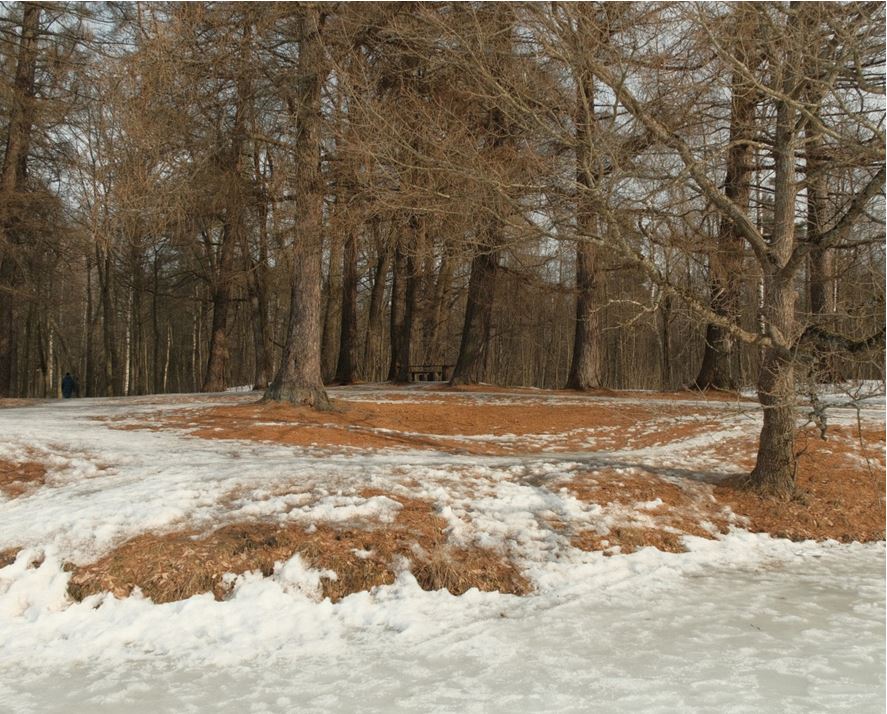
The area’s woody vegetation is mostly accounted for by secondary small-leaved forests, which have overgrown the former agricultural lands, and the successfully introduced species of estate parks (Fig. 7).
The areas adjacent to the coastlines of the Gulf of Finland, Lake Ladoga, and the Neva River are characterized by extensive waterlogging, with numerous small watercourses flowing from the interior parts of the area. The inland area, characterized by undulating lacustrine relief, retains remnants of agrarian development from past centuries. Subsequently, dacha settlements emerged in this area [31], some of them replaced now by large-scale residential developments.
The north of the St. Petersburg suburban area occupies the southern part of the Karelian Isthmus, whose relief is remarkably diverse: the depression skirting the shore of the Gulf of Finland is replaced by uplands in the centre and yet another depression towards the coast of Lake Ladoga. The relief significantly influences the layout of the transport network, thereby shaping the settlement system. The outer boundaries of the suburban area exhibit a distinct star-like pattern, with one arm tracing along the Gulf of Finland (Primorskoe motorway and the Finnish railway), another following the Vyborg motorway, a third extending along the Priozerskoe and Novo-Priozerskoe motorways and a fourth running along the Murmansk motorway. There is a large gap in the settlement system there, accounted for by an area that is neither populated nor involved in the transport network [32]. As a result, the outer boundary of the suburban area extends southward towards St. Petersburg, stretching from the city’s southern end to the shore of Lake Ladoga, north of the Borisova Griva railway station (Fig. 8).
The boundaries of the St. Petersburg suburban areas largely coincide with those of the First Belt of St. Petersburg agglomeration as proposed by Reznikov [28]. They are located the closest to each other to the north of St. Petersburg, especially in the unpopulated area, the farthest to the south, where transport and natural conditions significantly reduce the area of the suburban zone in comparison with those defined by Reznikov. Along the southern shore of the Gulf of Finland, the suburban zone stretches only to Oranienbaum-1 station, falling short of reaching the official border between St. Petersburg and the Leningrad region, let alone the town of Sosnovy Bor, which has never been considered a suburb of St. Petersburg [33]. By definition, a suburban zone cannot be divided into belts. Although some suburbs lie in the vicinity of St. Petersburg and others are located at a more significant distance from the city, they all have more similarities than differences. Settlements that lack common characteristics cannot be classified as suburban.
Conclusions
The current administrative boundary of St. Petersburg, established legally in the mid-1990s and effectively in existence since the 1970s, serves as the ‘organizing axis’ of the suburban area but does not perform a barrier function. Most of the territories lying on either side of this border are completely homogeneous. Given that the administrative boundary has little effect on the spatial structure of society, attributing to it the role of a border that delineates the ‘core’ from the ‘periphery’, as commonly suggested, lacks justification.
The interior boundary of the suburban area follows the 40-minute transport isochrone, which in the conditions of today’s St. Petersburg corresponds to about 20—22 km from the city centre assumed to be located in Kazanskaya Square. In the north and south of the city, this distance separates the centre from the outer boundary of the majority of multi-storey residential development; in the east, it slightly goes beyond its limits.
The outer boundary of the suburban zone is aligned with the two-hour isochrone, which lies today between 50 and 60 km away from the city centre. The areas of the territory located farthest from the city centre can no longer be considered part of the suburban area, which terminates approximately at the Zelenogorsk station on the northern shore of the Gulf of Finland and the Oranienbaum-1 station on its southern shore. The de jure territory of St. Petersburg along the northern shore of the Gulf stretches about 20 km westwards from the Zelenogorsk station and about 10 km from the Oranienbaum-1 station. However, the daily life of these areas is minimally, if at all, connected with St. Petersburg.
Moreover, the natural conditions of the outer boundary of the suburban zone are highly significant, as they contribute to the complex nature of this boundary. For instance, to the northeast of St. Petersburg, the suburban zone is divided by a sparsely populated forested area.
The landscapes in the suburban area, particularly to the south of St. Petersburg, exhibit characteristics that can be tentatively classified as ‘anthropogenic forest-steppe’. These are vast, almost non-forested areas with primarily cultivated woody vegetation. During this time, it was primarily inhabited by Ingrian Finns, who were likely responsible for ploughing the most fertile lands in what is now the St. Petersburg suburban area. To the north of the city, the ‘hallmark’ of the suburban zone, alongside the ‘anthropogenic forest-steppe’, are the secondary small-leaved forests that have developed on abandoned agricultural lands and former noble estate parks. Determining the boundaries of the St. Petersburg suburban area appears to be crucial for assessing the potential and future trajectories of the city’s spatial development. The boundaries of the agglomeration, variously drawn by different researchers and guideline documents, are based on the administrative boundaries of St. Petersburg and districts of the Leningrad Region. As noted earlier, the boundaries of St. Petersburg, and even those of the districts in the Leningrad region, have minimal influence on the spatial structure of society. A comprehensive approach to delineating the actual boundaries of the suburban area is crucial to mitigate further suburban sprawl and to pursue a balanced development policy that takes into account the interaction between society and the environment.
This study was supported by a joint grant from the Russian Science Foundation and the St. Petersburg Research Foundation within project № 23-27-10001 “St. Petersburg Suburban Areas: Nature and People”.
Reference