Economic security as a driver of Russian exclave development in alignment with national interests


Abstract
Economic security in border regions emerged as a new area of inquiry in human geography, under the supervision of Prof Fedorov and with the active involvement of researchers from Kaliningrad, Rostov-on-Don, Saint Petersburg, Smolensk, and Simferopol, within the framework of the Russian Science Foundation project № 18-17-00112, titled Ensuring the Economic Security of the Regions of Russia’s Western Borderlands under Conditions of Geopolitical Turbulence. This study is the first attempt at a comprehensive examination of economic security, considering a multitude of contributing factors: economic, social, domestic and foreign policy-related, ethnic and environmental. The socio-geographical approach to economic security provides insight into its spatial conditionality, informing our studies on regional and sectoral economics.
This article examines the Kaliningrad region’s economic development from the perspective of its exclave position, border functions and potential for ensuring Russia’s national interests. The assessment of the economic security of the region from 2000 to 2019, cited in earlier works, reveals a lack of resilience to external challenges and threats. In this article, we examine these results in the context of economic development quality and determinants, applying structural and resource-oriented approaches. It is demonstrated that, until 2022, the economic development of the Russian exclave did not fully align with national interests due to a prioritisation of international ties, often at the expense of interregional ones. Additionally, the region’s openness was increasing, with insufficient attention given to ensuring its sustainability under external constraints. Seeking to address existing shortcomings, this article presents and substantiates proposed modifications that give due consideration to economic security. Specifically, it emphasises functional and structural transformations within the regional management system.
Introduction
A critical question in the economic development of any region is identifying the factors influencing its processes and unique characteristics. Studying the economic development of the Kaliningrad region, Russia’s only exclave and an enclave within NATO and the EU, is crucial due to the external constraints imposed by the transformed international environment after 2022. A general understanding of regional development factors is framed by theoretical models such as economic growth, agglomerations, growth poles, new economic geography, and convergence. However, the emergence of new factors and the increasing complexity of regional development conditions perpetuate the scientific challenge of their study.
The analysis of regional development factors serves several key purposes. The first is to identify and classify the diverse factors, establishing a comprehensive typology [1], [2], [3]. The second is to investigate the influence of specific factors—such as geographical location, human capital, technology, and resources—on regional economic development, or alternatively, to explore their effects on particular types of regions, including internal, border, export-oriented, agrarian, resource-based, and northern regions [4], [5], [6], [7], [8]. Lastly, quantitative analyses of these factors often employ economic and mathematical modelling to provide deeper insights [9], [10].
In the context of the exclave Kaliningrad region, given its border location, the primary focus is on the influence of the border phenomenon on its economic development. The study of this phenomenon forms the basis for analyzing the effects of other factors [11], [12], [13]. Indeed, on the one hand, the defining role in the region’s economic development has been attributed to the functions and regime of the border, which shape its relations with neighbouring territories and the gradient of its development. On the other hand, the exclave region operates as a complex socio-economic system with inherent patterns and specific features of transformation.
Focusing predominantly on the border factor in studying the economic development of the exclave essentially limited its perceived role in the national economy to geostrategic, foreign trade, transit, and other international functions. In the context of the territory’s exclave position, this created risks of orienting the economic system toward international markets at the expense of internal sources of development. Consequently, the economic system became increasingly vulnerable, faced challenges in maintaining stability, and developed a high dependency on even minor changes in geopolitical or geo-economic conditions. This issue became fully apparent after 2022 and aligns with broader questions of ensuring the economic security of territories.
Therefore, the objective of this study is to substantiate economic security as a factor in the economic development of the Russian exclave, which, under contemporary conditions, represents a highly non-trivial task. Traditionally, the study of regional economic security has overlooked its spatial dimension. Moreover, in the context of economic development in exclave and border regions, issues of economic security have not been adequately addressed. Although the number of works addressing this problem has increased in recent years [14—18], a systemic understanding of the economic development of the Russian exclave in terms of ensuring the national economic security interests of the state has not yet been developed.
The object of this study is the Russian exclave, whose economic situation after 2022 has become more challenging compared to other regions of Russia, including border regions, with the clear exception of territories located near the line of military engagement during Russia’s Special Military Operation (SMO) in Ukraine. In the economic sphere, the proximity of unfriendly EU countries plays a significant role, while in the military-political domain, the influence of the NATO bloc is evident. As a result, the geostrategic role of the Russian exclave has significantly increased, along with its importance in safeguarding the national interests of the country.
In this study, continuing the examination of regional economic security and building upon the results of earlier publications [16], [17], [18], we attempt to address the following questions: how does the exclave position, along with the potential and functions of the border region, correlate with the tasks of ensuring Russia’s economic security; to what extent has the existing level of economic security of the Russian exclave determined the quality and drivers of its economic development; and what changes are required in the regional management system to ensure economic security.
Factors of Economic Development
The typologization of regional development factors is usually conducted based on various criteria: 1) source of origin (external and internal factors, etc.); 2) functional characteristics (natural, labour-related, economic, political, etc.); 3) control by regional authorities (controllable and uncontrollable factors); 4) impact on regional potential (legislative, labour, innovation, production, infrastructure, consumer, financial, environmental, etc.); 5) causes of regional differentiation by development level (objective and subjective factors); 6) type of resources and conditions (energy, water, transport, raw materials, etc.); 7) sphere of emergence and influence (economic and non-economic factors, with varying levels of detail); 8) direction of influence on regional development (catalysts and inhibitors); 9) nature and volume of resources (extensive and intensive factors); 10) level of impact (general, sectoral, local (regional), etc.). Examples of typologies and authorial approaches can be further extended. However, several key observations stand out. Firstly, the list of factors depends on the methodological approach used to identify and evaluate their impact on specific processes within a region. Secondly, the identified typologies often overlap due to the interaction of factors, forming subcategories, such as economic-demographic or production-financial factors. Thirdly, the set of economic development factors for individual regions or their types is unique. This set is neither static nor fixed; instead, it becomes more complex and expands over time.
For border regions, economic development factors are characterized by greater variability compared to internal regions. This is explained, all else being equal, by their openness and the predominance of the external vector in their development, which allows them to leverage the advantages of their economic-geographical position. However, this statement does not hold true for all border regions of Russia. The balance between external and internal vectors depends on the location of border regions along Russia’s borders, the established level and forms of cooperation with neighbouring countries, the existing border regime, and overall proximity to certain international markets (e. g., European, East Asian, etc.).
In the economic development of the Russian exclave, external interactions have played a decisive role compared to internal ones. As a result, the conditions for the exclave’s economic development have been shaped by unpredictable and poorly manageable processes. Therefore, an essential quality for the region is its ability to respond to ongoing changes, adapt to them, and ensure the sustainable functioning of its economy. For the Russian exclave, as well as for certain open border regions of Russia, it is proposed that factors of economic development be identified by considering the nature of the required and occurring changes based on two criteria: adaptation and integration. The choice of these criteria is linked to the direction of necessary changes within the economic system. Adaptation processes are associated with the adjustment of the economic system by utilizing internal potential. Integration processes involve the active use of the exclave’s and/or border region’s positional potential. At different levels of adaptation and integration processes, four groups of regional economic development factors emerge (Fig. 1).
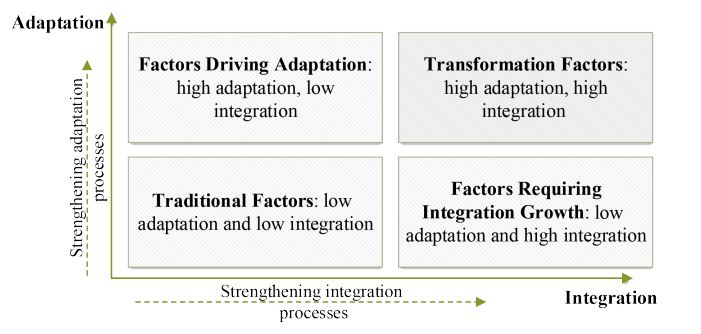
Traditional factors are associated with low levels of adaptation and integration within the economic system under relatively stable geopolitical and geo-economic conditions. These factors shape the conditions for economic development that are rarely, minimally, or only in the distant future subject to change. Therefore, traditional factors may include natural and climatic conditions, the structure of the economy, infrastructure, settlement systems, demography, and similar elements. Factors driving the growth of adaptation processes are linked to abrupt or wave-like changes, both external and internal, within the economic system. These require the development of adaptive qualities within the economic system and its adjustment to ongoing changes. Examples include the challenges posed by the COVID-19 pandemic, financial crises, reductions in labour resources, changes in standards and regulations (customs, taxation, certification, and standardization), fluctuations in international market conditions, and similar developments. Transformation factors demand qualitative changes within the economic system, such as shifts in technological paradigms, reindustrialization, increased economic complexity of products, or higher labour productivity. For exclave and border regions characterized by openness, these factors are also associated with significant changes in the geopolitical and geo-economic environment. Factors necessitating the growth of integration processes concern the strengthening of both interregional and international cooperation. This depends on the direction of ongoing changes in international relations. For instance, under external constraints, integration factors may involve processes of complex formation, while under favourable external conditions, they may include cross-border and border cooperation, neighbourhood programmes, and similar initiatives.
Among the factors mentioned, particular interest lies in those driving the growth of adaptation processes and those related to transformation. The first group of factors, in our view, correlates with regional resilience [19], [20], [21], shaping such properties of the economic system as shock resistance, stress tolerance, viability, and others, which have recently become a subject of active study among Russian researchers [22], [23], [24], [25]. The second group correlates with ensuring economic security, as these factors contribute to the region’s protection against challenges and threats, which is impossible without qualitative changes in the economic system itself and its transformation [16], [17], [18]. Thus, economic security emerges as a factor in economic development. As noted in our earlier works [16], economic security facilitates changes in the economic system through the following mechanisms: 1) achieving balance by adjusting reproductive proportions (functional approach); 2) improving territorial and sectoral structures and forming new economic linkages (process-based approach); 3) transforming the internal spatial architecture through processes of integration and system consolidation (spatial approach). Moreover, the economic development of each region is directed toward ensuring Russia’s national interests in the economic domain. In this regard, for the Russian exclave, under conditions of external constraints, studying economic security as a factor in economic development becomes a critical task.
Materials and Methods
Considering the changes in the economic system potentially generated by economic security, its substantiation as a factor in the economic development of the Russian exclave is based on: 1) the assessment of the region’s level of economic security; 2) the analysis of the quality of its economic growth using structural and resource-oriented approaches; 3) the identification of the functional characteristics (tasks) of economic security that require changes in the regional management system. The selection of these criteria shaped the research framework and guided its overall logic. In this study, all measurements and corresponding calculations were conducted using publicly available data from Rosstat, EMISS, and the Federal Customs Service of Russia. The author’s methodology and the results of measuring the level of economic security in the regions of Russia’s Western Borderlands were presented in a series of monographs [16], [17], [18]. In general terms, the level of economic security is assessed by calculating an integrated index that includes general, specific, and specialized subindices. Each subindex is formed based on groups of indicators of the same name. General indicators characterize the region’s role in addressing national tasks for ensuring economic security, specific indicators reflect the characteristics of economic security for certain types of regions, such as border and exclave regions, and specialized indicators evaluate specific types of economic security (food, financial, transport, etc.).
In total, the group of general indicators includes 20 indicators, the group of specific indicators includes 15, and the group of specialized indicators includes 35, covering 10 types of economic security [16, p. 208—212]. The justification for the selection of indicators into these groups is provided as follows: for general indicators, by their compliance with the metrics established in the Russian regulatory framework; for specific indicators, by the establishment of qualitative and quantitative correspondence to the dangers and threats arising from the border and/or exclave position factor; and for specialized indicators, by their targeted purpose, including at least three indicators for each type of security. The methodology provides for the selection of a normalization function for the indicators and the delineation of economically justified risk zones in accordance with the methodology described in [26]:
• catastrophic — below 0.25,
• critical — from 0.25 to 0.50,
• significant — from 0.50 to 0.75,
• moderate — from 0.75 to 1.0,
• stable — above 1.0.
The measurement was conducted for the period from 2000 to 2019, prior to the impact of the COVID-19 pandemic, which is more associated with resilience characteristics and less with economic security. Since 2022, measurements have been limited by the absence of publicly available data from the Federal Customs Service of Russia regarding the foreign trade of regions.
Assessment of the quality of economic growth in the Russian exclave helps to explain the extent to which the level of economic security achieved by 2022 protects the region from the materialization of latent threats into real events, thereby mitigating potential negative impacts and damage. This study applies structural and resource-oriented approaches. Using the widely known shift-share analysis method in regional studies [28], [29], [30], [31], the growth in gross value added is decomposed into national, sectoral, and regional components across three periods: a) 2007 compared to 2004 — the period before the global financial crisis of 2008; b) 2013 compared to 2008 — the period before the imposition of EU and US sanctions against Russia; c) 2019 compared to 2014 — the period before the onset of the COVID-19 pandemic.
The problem of discrepancies between classifications OKVED, OK 029-2001 (NACE Rev. 1), and OKVED 2, OK 029-2014 (NACE Rev. 2) was resolved by merging and aggregating them. Calculations were conducted using 2019 constant prices. The national component (NS) reflects the impact of changes in the national economy on the region’s gross value-added growth. The sectoral component (MS) captures sectoral shifts, while the regional component (RS) represents the combined influence of factors specific to the region (human capital, investment potential, economic specialization, etc.). The calculations employed well-established formulas for evaluating the components of structural shifts [28]:
(1)
where NS is the national component; GRPRF is the total of the gross regional product (GRP) of all Russian regions; t and t – 1 represent the current and preceding (base) years, respectively; i denotes the type of economic activity according to the OKVED classification; GRPi is the gross value added for the i-th type of economic activity in the region.
(2)
where MS is the sectoral component; GRPi(RF) is the total of the gross regional product (GRP) of all Russian regions for the i-th type of economic activity.
(3)
where RS is the regional component.
The resource-oriented approach complements the structural approach by accounting for the share of primary resource production. This reflects the extent to which raw material industries dominate the economic system and their significance. For the Russian exclave, the analysis considers the share of raw material exports and the dynamics of imports of consumer goods, intermediate goods (raw materials, components, and materials), and investment goods (technologies, machinery, and equipment). The identification of functional characteristics (tasks) of economic security was based on the need to integrate it into the target subsystem of regional management according to the following criteria: a) the conditions for regional development to ensure economic security; b) the alignment of the region’s economic development model with the objectives of economic security; c) the implementation of a strategic national priority in the economic sphere — the region’s contribution to ensuring Russia’s economic security.
Results
Assessment of Economic Security Levels. The results of measuring the level of economic security in the Russian exclave indicate that by early 2020, it was within the economically justified zone of moderate risk (Fig. 2).
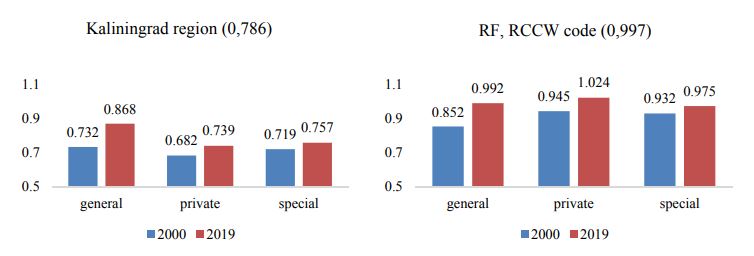
Note: The value of the integrated index for 2019 is indicated in parentheses.
During the study period, significant progress was made in strengthening economic security; however, its level remained low and significantly below the national average. There was considerable variability in subindices throughout the observed period. The unfavourable situation was revealed through the values of specific and specialized subindices, which reflect the impact of the exclave position on the level of economic security. Growth in the subindices occurred alongside minor positive changes in the indicators representing the region’s weakest areas of security. For instance, throughout the study interval, industries with low added value predominated, and the economy demonstrated a high dependency on budgetary investments, coupled with low labour productivity. The most significant influence came from the region’s substantial involvement in foreign trade activities, with relatively simple industries dominating the economic structure.
Even after 2014, the exclave’s economy continued to be characterized by high import dependency, and the region’s economic development relied on increasing budgetary investments. The greatest challenges were in ensuring financial, scientific-technological, transport, and production security. However, notable successes were achieved with federal support in improving food and energy security. There was an annual increase in the harvest of grain and oilseed crops, as well as significant growth in the production of milk, meat, eggs, vegetables, fruits, and berries.
To ensure uninterrupted and reliable energy supply to the region, between 2017 and 2020, in addition to the Kaliningrad CHP-2 power plant (900 MW), the following power plants were commissioned: Talahovskaya (156 MW), Mayakovskaya (156 MW), Pregolskaya (455 MW), and Primorskaya TPP (155 MW). Underground gas storage facilities (UGS) were built, along with Russia’s only floating regasification unit, the Marshal Vasilevsky. The total installed capacity of the region’s power system increased to 1,918.7 MW, including hydropower, thermal power, and wind power plants, while the peak consumption slightly exceeded 800 MW.1
The issue of transport accessibility persisted, affecting the delivery of fuel, goods for the population, and raw materials, components, and equipment for production. Transport and logistics issues became critically important for the exclave’s livelihood after 2022. Despite the implementation of urgent measures to organize and expand ferry services, these problems remain unresolved. Challenges include increasing the carrying capacity of vessels, particularly for specific classes (container ships, roll-on/roll-off vessels, passenger transport), as well as developing infrastructure, regulating tariffs, and creating subsidy mechanisms for maritime transportation.2
Analysis of the Quality of Economic Growth: A Structural Approach. Challenges in Ensuring Economic Security Until 2022. The challenges of ensuring economic security until 2022 were shaped by the specific characteristics of the economic development of the Russian exclave, as evidenced by indicators of structural shifts (Table).
|
Growth of GRP |
Total |
National component (NS) |
Sectoral component (MS) |
Regional component (RS) |
|
2007 to 2004 |
43.2 |
26.2 |
1.4 |
15.6 |
|
2013 to 2008 |
8.9 |
6.9 |
0.9 |
1.1 |
|
2019 to 2014 |
7.9 |
6.6 |
0.5 |
0.8 |
|
Source: Calculated based on Rosstat data.3 |
||||
From 2004 to 2007, the dynamics of gross value-added production were determined by national factors, a trend generally characteristic of Russian regions, as noted in [27]. However, in subsequent years, the impact of these factors diminished due to the slowdown in the growth of the national economy. While the sectoral factor exerted a positive influence, its contribution to GRP changes was relatively minor.
The increase in value-added was primarily driven by fast-growing industries compared to the overall growth rates of the national economy, including construction (+ 5.5 %), public administration (+ 3.4 %), trade (+ 2.7 %), and real estate activities (+ 1.1 %). Conversely, slow-growing industries included agriculture (– 2.6 %) and manufacturing (– 1.2 %). At the same time, certain industries grew at a slower rate than the national average, such as trade (– 2.2 %), manufacturing (– 2.1 %), and transport and communications (– 1.1 %), while the social sector grew faster (+ 1.5—1.7 %). Overall, the specific characteristics of the region had a more significant impact on economic growth (+ 15.6 %) than sectoral factors. This was primarily due to preferential regimes and federal support aimed at compensating for the exclave position. Particular expectations were associated with changes in the SEZ regime in the Kaliningrad region, notably the adoption of Federal Law №16 dated January 10, 2006.
In 2008—2013, the development of the exclave was primarily driven by national support measures due to the lack of sufficient internal potential, compounded by the more severe impacts of the crisis and the slow recovery of the economy. During this period, the nationwide component contributed + 6.9 % to the growth of GRP. The influence of sectoral and regional factors on the increase in gross value added declined. The slow recovery and subsequent growth lagging behind the national average were characteristic of mining (– 5.3 %), construction (– 4.8 %), trade (– 3.4 %), and the social sector (ranging from – 0.3 % to – 0.7 %). At the same time, manufacturing (+ 7.7 %), real estate operations (+ 6.9 %), and energy production and distribution (+ 1.0 %) experienced active growth.
In 2014—2019, following the imposition of the EU and US sanctions against Russia, the development of the Kaliningrad region also relied on federal support, with minimal contributions from sectoral (+ 0.5 %) and regional (+ 0.8 %) factors. During this period, certain sectors grew much faster than the national average, including energy production and distribution (+ 2.6 %), transport and communications (+ 2.6 %), real estate operations (+ 2.2 %), construction (+ 1.6 %), and agriculture (+ 1.3 %). However, manufacturing (– 7.1 %), mining (– 1.6 %), and public administration (– 1.1 %) lagged behind in growth rates.
Indicators of structural shifts at various stages of Kaliningrad region’s development highlight the strong influence of its exclave position and its high dependency on imports. The economic development of the exclave was essentially determined by the following factors: 1) institutional, primarily changes in the SEZ regime; 2) foreign trade activity, which declined during crises or unfavourable geopolitical conditions but increased under favourable circumstances; 3) the volume of federal support and preferences provided through government programs, subsidies, and other mechanisms. Under these conditions, ensuring the economic security of the Russian exclave did not play a significant role in its development. Periods of decreased economic security coincided with positive economic growth in the region, and vice versa. Calculations using Pearson’s correlation coefficient (R²) indicate no relationship between changes in the level of economic security and gross regional product. However, similar calculations for national averages reveal the opposite — a strong direct correlation (Fig. 3, a and b).
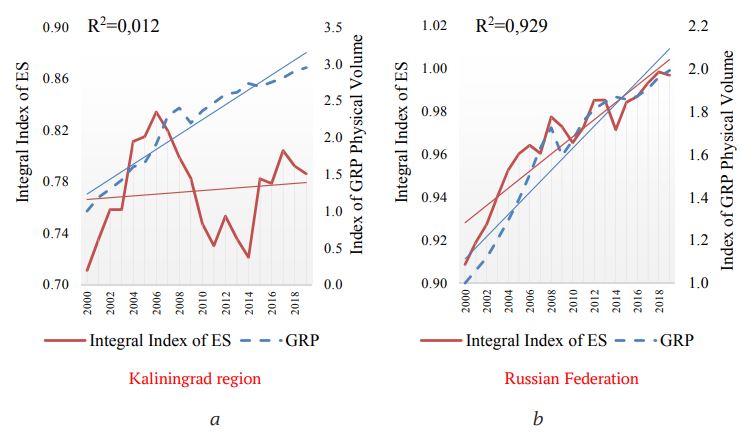
Thus, the external openness of the exclave exerted a significant influence on its economic development, albeit at the expense of economic security. An inverse relationship is observed between changes in the level of the exclave’s economic security and external economic conditions (Fig. 4). The assessment of changes in the integrated index of economic security and import dynamics was conducted over intervals that differ somewhat from those identified in the analysis of structural shifts. This discrepancy is explained by the following. The economic situation in the exclave was shaped not only by factors common to all Russian regions but also by specific intra-regional factors mentioned earlier. Therefore, the following periods are evaluated: the phase of active growth (2000—2006), the ‘survival’ phase (2007—2014), and the security phase (2015—2019).
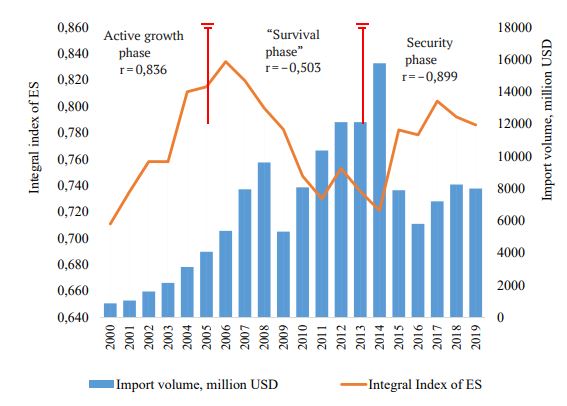
During the phase of active growth before 2006, primarily driven by an increase in industrial production, the correlation coefficient (r) indicates a strong positive relationship between economic security and imports. In the ‘survival’ phase, when the SEZ regime underwent significant changes and the 2008 crisis exerted its influence, the relationship between foreign trade activity and the region’s economic security was weak. Transformational processes affecting regional industries played a key role. These were driven by stricter criteria for sufficient processing of goods4 required for export without paying customs duties, as well as the establishment of a transitional period until 2016, after which goods exported to the rest of Russia were subject to full customs payments. In the security phase after 2014, when active implementation of state measures to strengthen the exclave’s security (transport, energy, food supply, etc.) began, a strong inverse relationship was noted: as imports grew, the level of economic security declined, and vice versa.
Despite the development of the exclave’s internal potential after 2014 and some strengthening of economic security, its role in economic development did not increase (R² = 0.181). This is explained by the continued external orientation of the exclave’s development, which heightened the region’s economic vulnerability to external conditions and restrictions.
Analysis of Economic Growth Quality: A Resource-Based Approach. The exclave hosts industries that produce economically simple goods—widely available products on external markets—with a poorly diversified export basket [32]. Consequently, the established industrial structure, combined with a low level of accumulated knowledge, lost production competencies since the 1990s, and weak absorptive capacity of economic systems contributes to vulnerability and increases the exclave’s dependence on geopolitical and geo-economic conditions. Significant progress in restructuring could have been achieved by the exclave through the implementation of an import substitution model after 2014. However, the development of industries occurred while maintaining resource and technological dependency. The share of intermediate (raw materials, components) and investment (technologies, machinery, and equipment) goods in total imports increased. Notably, in the Russian exclave, this share is significantly higher than in other border regions of the Northwest (Fig. 5).
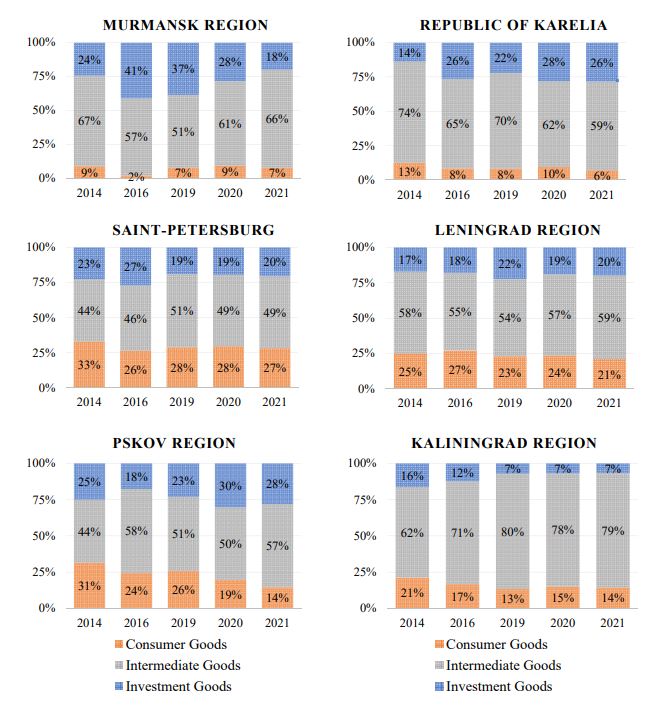
Note: The column totals do not add up to 100 % because some goods lack HS (Harmonized System) codes in the Federal Customs Service database, or they are complex goods that cannot be definitively grouped into specific categories.
In the import structure of the Kaliningrad region, intermediate goods consistently account for approximately 80 %, with a lesser presence of capital goods. After the sharp decline in imports in 2014, the volume remained relatively stable. This indicates difficulties in substituting certain product categories through interregional trade flows or is likely associated with increasing production costs.
A similar issue emerged at the national economic level, becoming evident after 2022,5 when critical import dependence arose across industries due to the absence of Russian equivalents or their extremely limited availability from foreign suppliers. This was particularly pronounced in components, machinery and equipment, and services (engineering, design, planting, and repair) across sectors such as pharmaceuticals, automotive manufacturing, computers and electronics, light industry, and others.
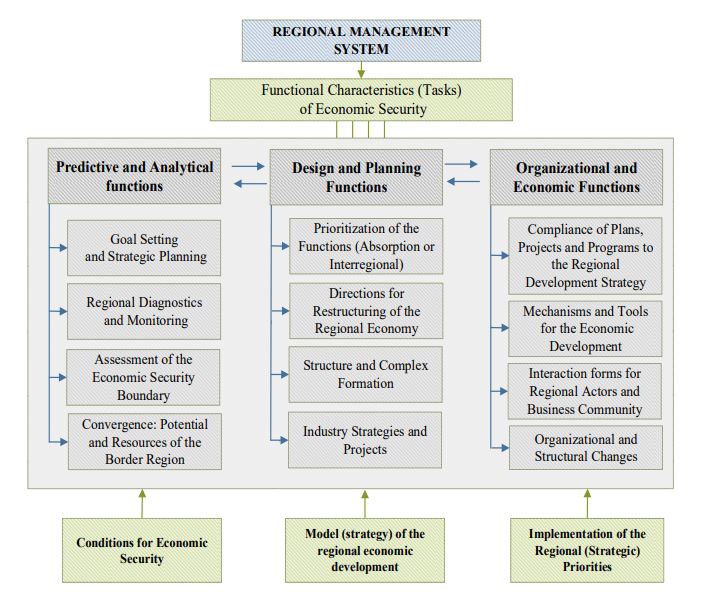
Functional Characteristics (Tasks) in the Management System. For the Kaliningrad region, after 2022, under the conditions of transport, production, scientific-technological, and other constraints, ensuring economic security has transitioned from being merely a factor in economic development to becoming a comprehensive strategy for sustaining the Russian exclave. Consequently, a key issue is the integration of economic security into the regional management system, driving its transformation and structural changes. Overall, the changes in the region’s management system are linked to the emergence of additional functions (Fig. 6).
Functional characteristics of economic security in the system of regional management are associated with the following tasks: forecast-analytical tasks, which allow for the evaluation of conditions for ensuring the economic security of the region; planning and project tasks, which involve the selection and justification of strategic directions for the region’s economic development; and organizational and economic tasks, which concern the implementation of strategic (regional) priorities to ensure and protect national interests in the economic sphere.
The boundaries of regional economic security, as well as their functions and roles in ensuring national interests, differ. Therefore, the formation of the following key blocks in the regional management system of the Russian exclave becomes fundamentally important: 1) regional diagnostics; 2) goal setting within the framework of economic security; and 3) monitoring of economic security in addressing national objectives.
Regional diagnostics makes it possible to identify economic problems that need to be addressed by state economic policy and regional government authorities. Based on its content, regional diagnostics should be conducted periodically, in accordance with the strategic planning cycles for the development of the border region. In goal setting, the critical issues are assessing the boundaries of economic security for the border region, the level of economic security depending on changes in the potential and resources of the region, and the region’s positions in solving national objectives related to ensuring the economic security of the state. Monitoring involves assessing changes in the exclave’s position in terms of ensuring economic security and the level of achievement of the set goals for the region’s economic development. Based on the results of annual monitoring of economic security, an information-analytical database is formed for subsequent regional diagnostics of the challenges in ensuring economic security.
In general, economic security imposes requirements for substantiating and selecting a new model for the economic development of the Russian exclave. Firstly, it is necessary to assess the current situation in the region from the perspective of using its potential and resources and their alignment with key types of economic activity, the need and opportunity for restructuring the regional economy based on diagnostics of economic development problems, and the analysis of regional (strategic) priorities and the choice of directions for implementing the exclave’s interregional and functional roles in protecting national interests. Secondly, the key functions of the exclave, provided that they can be realized and are of high importance for protecting national interests, should be preserved, and the development of the corresponding economic sectors should involve special federal regulatory measures (for example, shipbuilding, metal processing, chemistry and pharmaceuticals, automotive manufacturing, etc.). Thirdly, the economic development of the Russian exclave should aim to strengthen its role and position in ensuring the economic security of the state, which requires corresponding changes in Russia’s federal spatial policy. This is related to defining the unique status of the exclave and the approach to its economic development. Special mechanisms for the economic development of the exclave need to be developed, solidifying its position within the unified economic space of the country.
Conclusions
The study substantiates that, under current conditions, economic security must become a key factor in the economic development of the Russian exclave. On the one hand, this is dictated by the need to ensure and protect the country’s national interests in the economic sphere, in which regions, including the Russian exclave, play an important role due to its unique position. On the other hand, proximity to international markets has often oriented the economic development of the Kaliningrad region toward extracting additional rent at the expense of national interests, raising concerns in the past. In conditions of openness, orientation toward external rather than internal markets, and strengthening international rather than interregional ties, the exclave’s economic development did not contribute to solving national objectives related to ensuring the economy’s resilience to external and internal threats. This is confirmed by the assessment of the exclave’s economic security level during 2000—2019, which, prior to the COVID-19 pandemic and external restrictions after 2022, was below the national average.
An analysis of structural shifts revealed that the economic development of the Russian exclave after 2008 was predominantly supported by the national component, expressed in increased federal support and additional preferences. Sectoral and regional factors combined did not significantly influence the growth of gross regional product. Against this backdrop, the strengthening of economic security positions occurred slowly, and its changes were weakly correlated with the region’s economic development rates. Moreover, during periods of increased foreign trade activity in the region, the level of economic security declined. The greatest challenges were associated with ensuring industrial, transport, and scientific-technological security, which were explained by the exclave’s geographical position. However, ensuring economic security did not become a priority for the economic development of the Russian exclave, even after 2014, against the backdrop of EU and US sanctions and the active implementation of the import substitution model in Russia. Despite a reduction in foreign trade turnover, intermediate goods (raw materials, components, etc.) continued to constitute a significant share of imports. As a result, by 2022, a strong dependency on specific imported goods, including technological items, had formed.
The contemporary status of the Russian exclave, shaped by external restrictions, a shifting global order, and emerging threats, calls for prioritizing its economic development to enhance economic security. This task is not only critical for addressing the region’s sustainability challenges but also for reinforcing its geostrategic role in advancing Russia’s national interests. Ensuring the exclave’s economic security must be legally codified at both the federal and regional levels and integrated into the regional management framework. Strategic planning for the economic development of the Russian exclave should align with the objective of bolstering its economic security. Consequently, changes in the regional management system should incorporate forecasting, analytical, planning, and organizational-economic functions within its target subsystem. Goal setting within the framework of ensuring economic security is impossible without high-quality regional diagnostics and ongoing monitoring, which require corresponding methodological developments. Highlighting economic security as a regional factor determines the need to substantiate and adopt a new model of economic development, which today represents a complex challenge. It is necessary to ensure a balance of interests (military-political, industrial, scientific-technological, transport, social, etc.) within a limited decision-making space, taking into account the low internal potential and existing resources for development under the exclave’s conditions.
The research was conducted as part of the Russian Science Foundation project №18-17-00112 “Ensuring economic security in Russia’s western border regions amidst geopolitical turbulence.”
Reference